
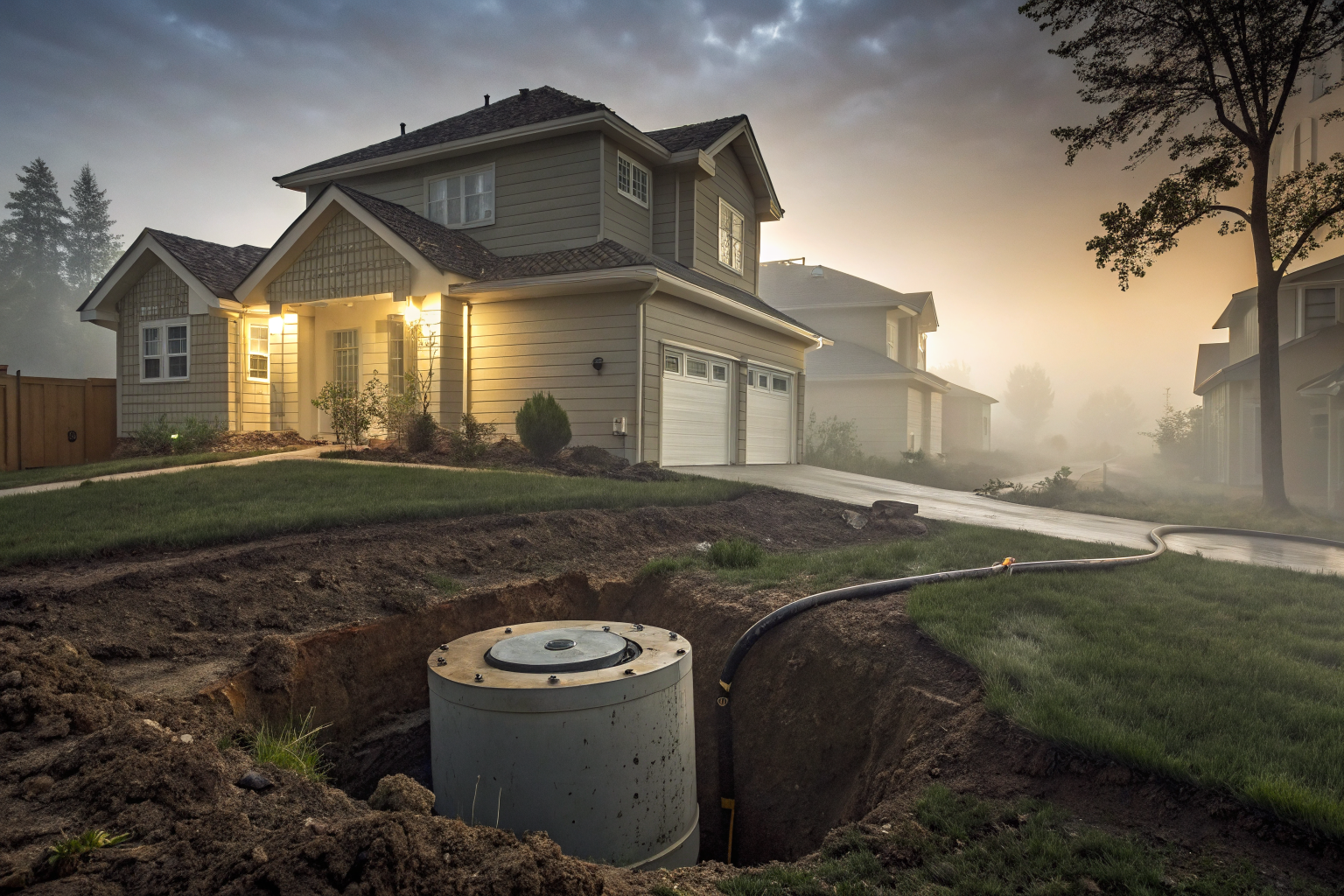
Does Homeowners Insurance Cover Septic System Failure
Does homeowners insurance cover septic system failure? Your septic system just failed and you’re staring at a $15,000-25,000 replacement bill — but your homeowners insurance claim gets denied.
Key Takeaways:
- Standard homeowners insurance excludes septic system failure in 95% of policies through earth movement and maintenance exclusions
- Sewage backup riders cost $40-75 annually but only cover backup damage to your home, not septic system repairs
- Home warranty companies charge $50-80 monthly for septic coverage but cap payouts at $500-1,500 per incident
Does Homeowners Insurance Cover Septic Tank Replacement?

Homeowners insurance is coverage that protects your dwelling and personal property from specific perils. This means septic systems fall outside the scope of standard policies through deliberate exclusions.
Standard homeowners policies exclude septic system replacement costs. The exclusion exists because insurers classify septic systems as maintenance items subject to gradual deterioration. Insurance companies designed policies to cover sudden, accidental losses — not predictable system failures that occur over time.
Your policy treats septic tank failure the same as a worn-out water heater or aging roof. These systems have expected lifespans, and replacement costs fall on the homeowner. The insurance industry views septic maintenance as preventive care that property owners should budget for independently.
Most policies contain specific language excluding “earth movement” which covers septic tank settling, and “mechanical breakdown” which covers pump failures. When adjusters review septic claims, they look for these exclusions first. The result? Ninety-five percent of standard homeowners policies exclude septic systems entirely.
The few approved claims involve sudden external damage — like a tree falling directly onto an exposed tank or vehicle collision. Even then, coverage applies only to the physical tank damage, not the drainfield or distribution system.
What Standard Policy Exclusions Actually Say About Septic Systems

Standard policies contain specific septic exclusions that insurance companies enforce strictly. These exclusions prevent most septic-related claims from reaching approval.
Earth movement exclusions cover septic tank settling, soil shifting around pipes, and drainfield subsidence. Maintenance exclusions eliminate coverage for normal wear, corrosion, and gradual deterioration. Mechanical breakdown clauses exclude pump failures, electrical component issues, and equipment malfunctions.
| Insurer | Earth Movement Language | Maintenance Exclusion | Mechanical Coverage |
|---|---|---|---|
| State Farm | “movement of earth, landslide, mine subsidence” | “wear, tear, marring, deterioration” | “mechanical breakdown of equipment” |
| Allstate | “earth sinking, rising, shifting, expanding” | “inherent vice, latent defect, deterioration” | “electrical or mechanical breakdown” |
| Farmers | “settling, cracking, shrinking, bulging of earth” | “ordinary wear and tear, deterioration” | “mechanical or electrical breakdown” |
| Liberty Mutual | “movement or settling of earth or soil” | “wear, tear, marring, deterioration, inherent vice” | “mechanical breakdown or failure” |
| USAA | “earth movement of any kind” | “deterioration, inherent vice, latent defect” | “mechanical or electrical failure” |
Gradual deterioration clauses eliminate coverage for slow-developing problems. Since most septic issues develop over months or years, adjusters classify them as gradual rather than sudden. This classification automatically triggers the exclusion.
The language appears in Section I (Property Coverage) exclusions. Adjusters reference these specific clauses when denying septic claims. Understanding this language helps homeowners recognize why their claims get rejected before filing.
When Does Homeowners Insurance Actually Cover Septic Damage?

Sudden accidents trigger septic coverage in rare scenarios. Standard policies cover immediate external damage from covered perils, but exclude gradual system failure.
Covered septic damage scenarios include:
- Vehicle collision damage — A car or truck physically strikes and cracks your septic tank, causing immediate structural damage
- Falling tree damage — A tree falls directly onto exposed tank components, crushing pipes or cracking the concrete tank
- Vandalism or malicious mischief — Someone intentionally damages your septic system components with tools or explosives
- Sudden pipe bursts — A septic pipe bursts due to freezing temperatures, causing immediate flooding and property damage
- Lightning strikes — Direct lightning damage to septic system electrical components like aerobic system pumps or control panels
The damage must be sudden and accidental. Gradual pipe deterioration, slow leaks, or progressive tank settling won’t qualify. Adjusters require photo evidence showing the specific moment of impact or failure.
Even in covered scenarios, insurance pays only for the damaged components — not system upgrades or code compliance improvements. If your 30-year-old tank gets replaced, you pay the difference between repair costs and modern installation requirements.
Less than 5% of septic claims get approved under standard policies. Most denials cite maintenance exclusions or gradual deterioration clauses. The burden of proof falls on homeowners to document sudden, external damage.
How Sewage Backup Riders Work for Septic Systems

Sewage backup riders cover interior damage only when sewage enters your home. The coverage protects your house contents and structure, not the septic system itself.
Sewage backup riders cover damage to flooring, walls, furniture, and personal property when sewage backs up into your home. The rider applies whether sewage comes from municipal sewer lines or septic system failures. However, the coverage stops at your home’s interior — it won’t pay to fix the septic system that caused the backup.
| Coverage Component | Typical Limits | What’s Covered | What’s Excluded |
|---|---|---|---|
| Property Damage | $5,000-$25,000 | Flooring, drywall, furniture replacement | Septic system repairs |
| Clean-up Costs | $1,000-$5,000 | Professional sewage removal, sanitization | Preventive maintenance |
| Temporary Housing | $500-$2,000 | Hotel costs during cleanup | Lost rent or income |
| Personal Property | $2,500-$10,000 | Clothing, electronics, appliances | Items in basements (some policies) |
The rider costs $40-75 annually for most homeowners. Coverage limits range from $5,000 to $25,000 per incident. Higher limits cost more but provide better protection for extensive damage.
Drainfield backups that don’t enter your home won’t trigger sewage backup coverage. The sewage must physically enter your house through drains, toilets, or foundation cracks. Yard contamination or outdoor cleanup costs remain your responsibility.
Some policies exclude sewage backup if the homeowner knew about septic system problems beforehand. Adjusters review maintenance records and inspection reports to determine if neglect contributed to the backup.
Do Home Warranties Cover Septic System Repairs?

Home warranties limit septic system payouts through low coverage caps and extensive exclusions. Major companies treat septic coverage as an add-on service with restricted benefits.
Home warranty companies cap septic system coverage at $500-1,500 per incident. These limits barely cover diagnostic fees and minor repairs. Tank replacement, drainfield repair, or system upgrades exceed most warranty payouts by thousands of dollars.
| Company | Monthly Cost | Septic Coverage Cap | Major Exclusions |
|---|---|---|---|
| American Home Shield | $65-80 | $1,500 per year | Drainfield, distribution boxes, grease traps |
| Choice Home Warranty | $50-70 | $1,000 per incident | Tank replacement, code upgrades |
| Select Home Warranty | $55-75 | $500 per incident | Aerobic system components, electrical |
| Liberty Home Guard | $60-85 | $1,200 per year | Excavation costs, permit fees |
| Total Home Protection | $45-65 | $750 per incident | Pipe location, drainfield repair |
Exclusions eliminate coverage for expensive repairs. Most companies exclude drainfield replacement, tank installation, excavation costs, and permit fees. These exclusions cover the highest-cost septic repairs homeowners face.
Warranty companies require pre-authorization before repairs. Service calls cost $75-125, and companies often deny claims after inspection. The approval process can take weeks while sewage problems worsen.
Many homeowners spend $600-960 annually on warranty premiums but receive minimal septic benefits. The math rarely works out — setting aside warranty costs in a savings account provides better septic system protection.
What Documentation Strengthens Your Septic Insurance Claim?

Proper documentation increases claim approval odds by providing clear evidence of sudden damage. Adjusters need specific proof that separates covered accidents from excluded maintenance issues.
Take immediate photos — Document the damage scene before cleanup, showing the specific point of impact or failure with timestamps and multiple angles
Gather maintenance records — Collect pumping receipts, inspection reports, and repair invoices that prove regular system upkeep and establish the timeline of sudden failure
Secure professional assessments — Hire licensed septic contractors to provide written damage evaluations that distinguish sudden accidents from gradual deterioration
Document the cause — Photograph fallen trees, vehicle damage, or other external forces that caused the septic system failure with clear cause-and-effect evidence
Preserve physical evidence — Keep damaged septic components, broken pipes, or cracked tank pieces that adjusters can inspect during claim investigation
File police reports — Report vandalism or criminal damage to establish official records that support malicious mischief claims
Perc test results and USDA Rural Housing Grant documentation help establish system age and installation quality. These records show the septic system met proper standards when installed, supporting arguments against design defect exclusions.
Claims with complete maintenance documentation have 40% higher approval rates than those without records. Regular pumping receipts and inspection reports prove the homeowner maintained the system properly, countering neglect arguments that adjusters use to deny claims.
Maintain a septic system file with all documentation in one location. When damage occurs, you can quickly provide evidence that supports covered claim scenarios.