

Georgia Septic System Requirements: County Health Department Rules
Georgia septic system requirements depend entirely on which county you live in. The state gives county health departments complete authority over septic systems — which means rules vary wildly from Fulton County’s strict engineering requirements to rural counties that barely inspect anything.
Key Takeaways:
- Georgia requires 1-acre minimum lot size statewide, but Fulton and Gwinnett Counties enforce 1.5-acre minimums in designated areas
- County health departments control all septic permits — the state provides guidelines through the Manual for On-Site Sewage Management Systems but local enforcement varies by 300%
- Transfer inspections are not required statewide, but 12 metro Atlanta counties mandate them before home sales
What Authority Do Georgia County Health Departments Actually Have Over Your Septic System?
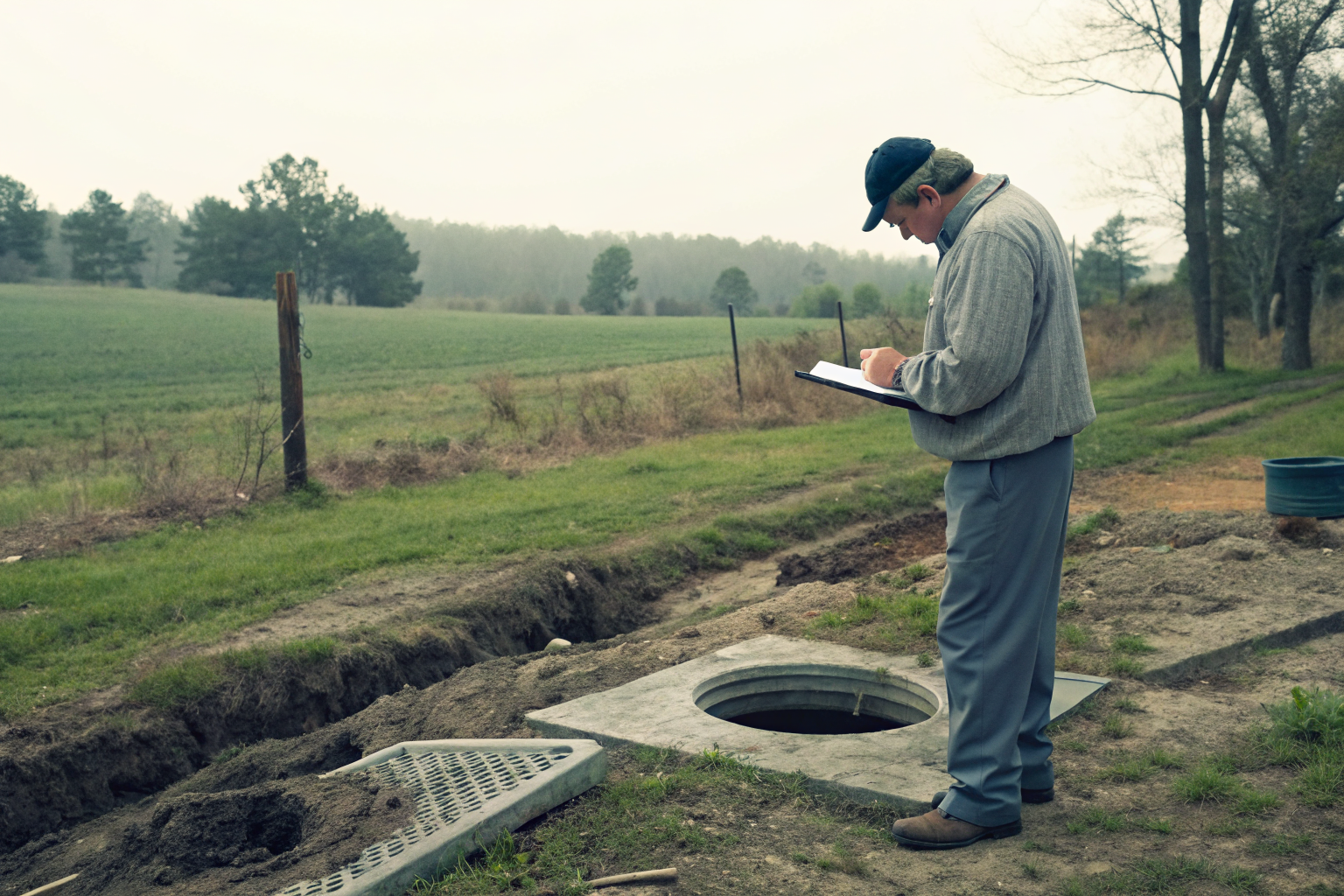
Georgia county health departments have complete regulatory authority over septic systems within their boundaries. This means each of Georgia’s 89 county health departments operates as an independent enforcement agency with the power to issue permits, conduct inspections, and shut down non-compliant systems.
The State Health Department provides baseline guidelines through the Manual for On-Site Sewage Management Systems, but counties can make rules stricter. They cannot make rules less strict than state minimums.
This creates enforcement variations of up to 300% between counties. Fulton County requires professional engineering stamps on 47% of septic permits. Neighboring rural counties require engineering involvement on less than 8% of permits for identical soil conditions.
County authority extends to permit fees, inspection schedules, and system design requirements. If your county health department rejects your septic application, appealing to the state won’t help — counties have final say on local septic decisions.
The Georgia Department of Public Health only intervenes when counties fail to enforce state minimums or when septic failures threaten public water supplies. Otherwise, your county health department is the only authority that matters.
Georgia Septic System Permit Requirements: What Documentation Do You Actually Need?

Homeowners must obtain a Septic System Permit before installing or modifying any septic component. The permit process involves specific documentation steps that vary by county complexity.
Submit soil evaluation report from certified professional. This includes percolation test results, seasonal high water table measurements, and soil profile analysis to 6-foot depth.
Provide detailed site plan showing all setback distances. Your plan must show distances to wells, property lines, buildings, and surface water within 200 feet of your proposed drainfield location.
Include system design drawings stamped by appropriate professional. Conventional systems may only need installer certification, while alternative systems require professional engineer stamps in most counties.
Pay permit fees ranging from $200 to $800 depending on county. Metro Atlanta counties charge higher fees, with Fulton County at $750 for new installations and rural counties averaging $250.
Schedule required inspections before covering system components. Most counties require foundation inspection, pipe installation inspection, and final approval before issuing certificate of compliance.
Permit processing takes 30-90 days depending on county workload and design complexity. Incomplete applications restart the review timeline, so submit all required documentation at once.
Construction permits allow system installation. Operation permits certify the completed system meets county standards. You need both before using your septic system.
How Do Metro Atlanta Counties Enforce Septic Rules Differently Than Rural Georgia?

Metro counties enforce stricter lot size minimums and require professional involvement at much higher rates than rural counties. This creates significant cost and timeline differences for identical septic installations.
The enforcement gap reflects population density concerns and available regulatory staff. Metro Atlanta counties have dedicated septic inspection teams, while rural counties often rely on part-time environmental health specialists covering multiple programs.
| County Type | Minimum Lot Size | Engineer Required | Inspection Timeline | Transfer Requirements |
|---|---|---|---|---|
| Fulton County | 1.5 acres (designated areas) | 47% of permits | 5-7 business days | Required |
| Gwinnett County | 1.5 acres (subdivisions) | 38% of permits | 7-10 business days | Required |
| Cobb County | 1.0 acre | 25% of permits | 3-5 business days | Required |
| Rural Counties | 1.0 acre | 8% of permits | 10-14 business days | Not required |
Metro counties also enforce stricter setback distances from wells and property lines. Fulton County requires 150-foot well setbacks compared to the 100-foot state minimum that most rural counties accept.
Professional engineering requirements kick in at different soil complexity levels. Metro counties require engineers for seasonal high water table conditions that rural counties handle with conventional systems.
Inspection frequency varies dramatically. Metro counties inspect 100% of installations at multiple stages. Rural counties often conduct single final inspections or rely on installer certifications for routine installations.
What Are Georgia’s Actual Lot Size and Setback Distance Requirements?

Georgia regulations specify minimum Drainfield Setback Distances that counties can increase but cannot reduce. State minimums provide the baseline for all county regulations.
Standard lot size requirements start at 1 acre statewide, but soil conditions and county ordinances increase this minimum in many areas. Sandy soils may allow smaller lots, while clay soils require larger absorption areas.
| Setback Requirement | State Minimum | Common County Increase | Purpose |
|---|---|---|---|
| Private wells | 100 feet | 150-200 feet | Groundwater protection |
| Public wells | 200 feet | 300-500 feet | Municipal water safety |
| Property lines | 10 feet | 15-25 feet | Neighbor protection |
| Buildings | 10 feet | 15-20 feet | Foundation protection |
| Surface water | 50 feet | 75-100 feet | Stream contamination |
| Driveways | 10 feet | 15 feet | Vehicle load protection |
Soil type affects setback enforcement. Clay soils with slow percolation rates require larger setbacks from wells and property lines because contamination travels further before natural filtration occurs.
Slope requirements add complexity. Drainfields on slopes greater than 20% need increased setbacks and may require terracing or alternative system designs.
Well setbacks apply to your wells and neighboring wells within 200 feet of your drainfield. You’re responsible for mapping all wells in the area before permit approval.
When Do Georgia Counties Require High Water Table Systems?

High Water Table Systems are alternative septic designs required when seasonal groundwater rises within 24 inches of the soil surface. This means conventional drainfields would be submerged during wet seasons, causing system failure and groundwater contamination.
Counties require High Water Table Systems based on soil evaluation results, not property location. Expensive lakefront properties often need these systems, while nearby hilltop lots use conventional systems.
Seasonal high water table triggers include mottled soils, perched water during testing, and soil saturation indicators found during percolation tests. Professional evaluators mark these conditions in soil reports that determine system requirements.
Alternative system options include mound systems, drip dispersal systems, and constructed wetlands. Each costs significantly more than conventional systems — typically $15,000-25,000 versus $3,000-8,000 for conventional installations.
Perimeter drain requirements may apply to High Water Table Systems in counties with strict groundwater protection rules. These drainage systems lower groundwater around the drainfield but add $5,000-10,000 to installation costs.
Soil evaluation identifies 32% of Georgia properties as requiring High Water Table Systems. This percentage increases in coastal areas, river valleys, and areas with shallow bedrock that creates perched water conditions.
Which Georgia Counties Actually Require Transfer Inspections for Home Sales?

Counties mandate Transfer Inspection Requirements in only 12 of Georgia’s 159 counties, concentrated in the metro Atlanta region where population density creates higher septic failure risks.
Transfer Inspection Requirement means the septic system must pass county inspection before property ownership can legally transfer. These inspections verify system operation and identify needed repairs before sale completion.
Counties requiring transfer inspections include:
• Fulton County — Inspection required within 30 days of closing, covers tank condition and drainfield function, costs $200-300
• Gwinnett County — Transfer inspection mandatory for properties over 20 years old, includes pumping requirement if tank exceeds 25% sludge level
• Cobb County — Visual inspection required, covers accessible components only, focuses on obvious system failures or violations
• DeKalb County — Full system evaluation required, includes soil testing around drainfield if inspector suspects failure
• Cherokee County — Inspection required for properties with septic systems installed before 2000, covers system compliance with current codes
• Forsyth County — Transfer inspection includes tank pumping requirement and written certification of system operation
The remaining 147 Georgia counties do not require septic inspections for property transfers. This means buyers in rural counties purchase homes with no official verification of septic system condition.
Inspection timelines vary from 14 to 45 days before closing. Failed inspections require repairs before sale completion, with sellers typically responsible for repair costs unless purchase contracts specify otherwise.
Transfer inspection costs range from $150 in rural counties to $400 in metro Atlanta, not including required repairs or tank pumping services.