
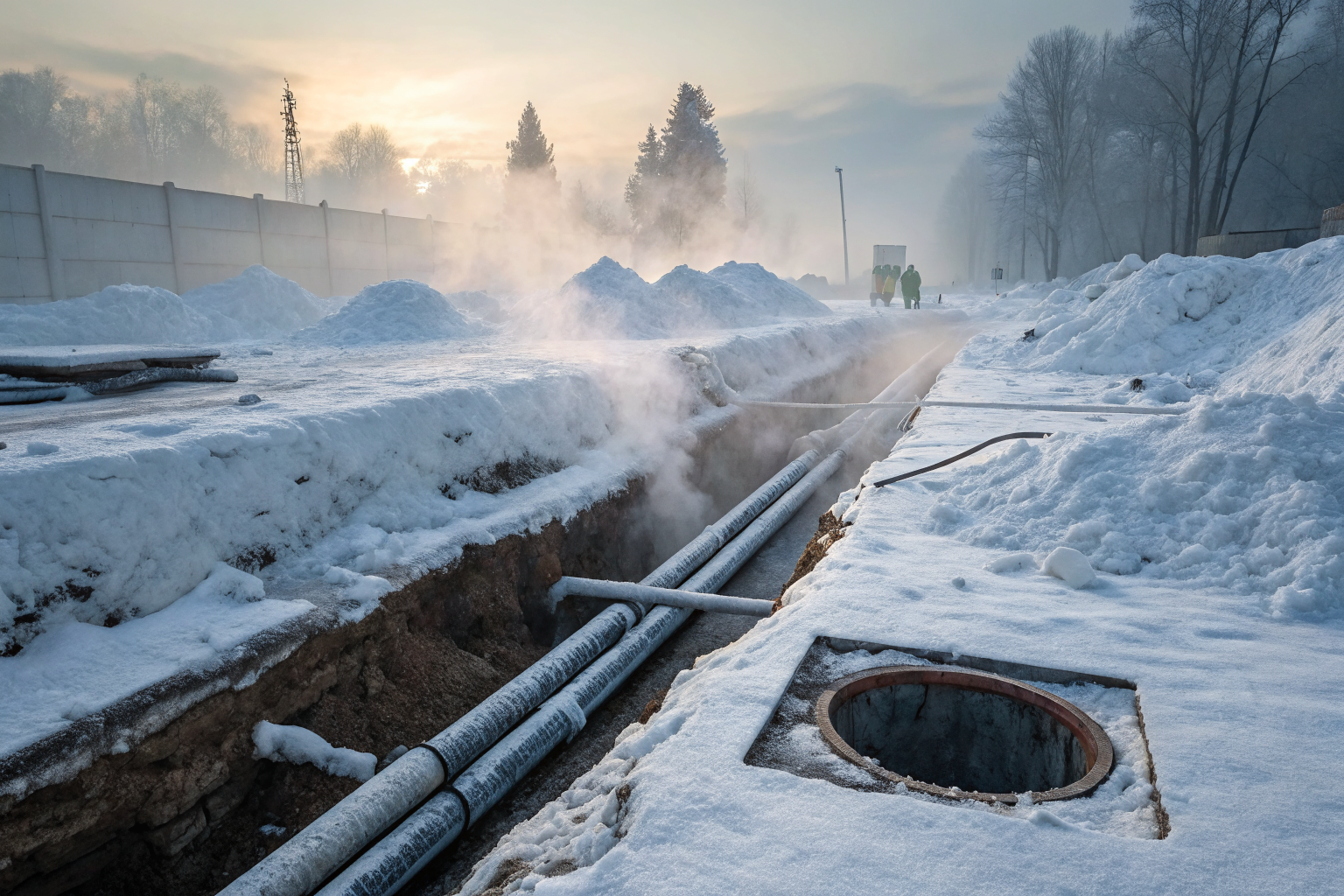
Septic System Winter Care: How to Prevent Freeze Damage
Septic system winter maintenance prevents the kind of freeze damage that costs homeowners $3,000+ in emergency repairs plus a week without working plumbing in sub-zero weather.
Key Takeaways:
• Vacant seasonal homes face 67% higher freeze risk than occupied properties with regular water flow
• Snow cover provides R-1.5 insulation per inch — 12 inches equals standard foam board protection
• Emergency septic thawing costs $800-2,400 vs $150-300 for proper pre-winter preparation
Can Your Septic System Actually Freeze?

Septic system freezing is the complete blockage of wastewater flow due to ice formation in pipes, distribution boxes, or tank components. This means your toilets, sinks, and drains stop working until the ice melts or gets professionally removed.
Your septic tank itself rarely freezes. Buried 4-6 feet underground, the tank stays insulated by soil mass and benefits from the natural decomposition heat of waste bacteria. Ground temperature at that depth hovers around 50°F even when surface temps hit -20°F.
Pipes freeze first. The inlet pipe from your house to the septic tank sits closer to the surface — typically 18-36 inches deep. At 32°F surface temperature, these pipes start forming ice crystals. The drainfield distribution box and outlet pipes face the same vulnerability.
Drainfield lines freeze when they lack regular water flow. Occupied homes push warm wastewater through the system daily, preventing ice formation. Vacant properties lose this protection. Static water in pipes turns solid at 32°F, creating complete blockages.
Shallow installations freeze faster. Homes built before 1990 often have septic components installed too close to the surface. Modern EPA septic system guidelines require deeper burial specifically to prevent freeze damage.
Cracked pipes make everything worse. Pre-existing damage lets groundwater seep in, which freezes and expands existing cracks. What starts as a small leak becomes a major rupture requiring full pipe replacement.
Pre-Winter Septic System Inspection Checklist

Schedule your septic system inspection 6-8 weeks before the first hard freeze in your region. This timing lets you fix problems before winter weather makes repairs difficult and expensive.
Check scum and sludge levels in your tank during the inspection. Tanks over 75% full need pumping before winter because high waste levels can push solids into the drainfield, creating blockages that freeze.
Walk your property to identify exposed pipe sections. Look for areas where soil has eroded away from pipes or where you can see tank lids or distribution boxes. These spots need additional soil cover.
Examine all tank risers and access ports for proper sealing. Loose or missing covers let cold air directly into your system. Replace cracked covers and ensure tight fits.
Test water flow from all fixtures to detect slow drainage. Sluggish drains indicate partial blockages that will worsen when combined with freeze conditions.
Locate your tank and drainfield boundaries with a probe or metal detector. Mark these areas so you know where to add insulation materials without damaging buried components.
Document any wet spots or odors in your drainfield area. These signs point to system problems that need professional attention before temperatures drop.
Verify your septic tank pumping records match recommended frequency. Households of 4 people with a 1,000-gallon tank need pumping every 2-3 years. Overdue tanks create freeze risks.
Call a professional if you find standing water, strong odors, or can’t locate system components. DIY fixes for major problems often make winter damage worse.
Which Septic System Components Freeze First?
| Component | Typical Burial Depth | Freeze Threshold | Repair Cost Range |
|---|---|---|---|
| Inlet Pipe | 18-36 inches | 25°F surface temp | $400-800 |
| Outlet Pipe | 18-24 inches | 28°F surface temp | $500-900 |
| Distribution Box | 12-18 inches | 30°F surface temp | $600-1,200 |
| Drainfield Lines | 18-30 inches | 32°F surface temp | $1,500-3,500 |
| Septic Tank | 48-72 inches | Rarely freezes | $200-500 for access |
| Pump Chamber | 36-48 inches | 20°F surface temp | $800-2,000 |
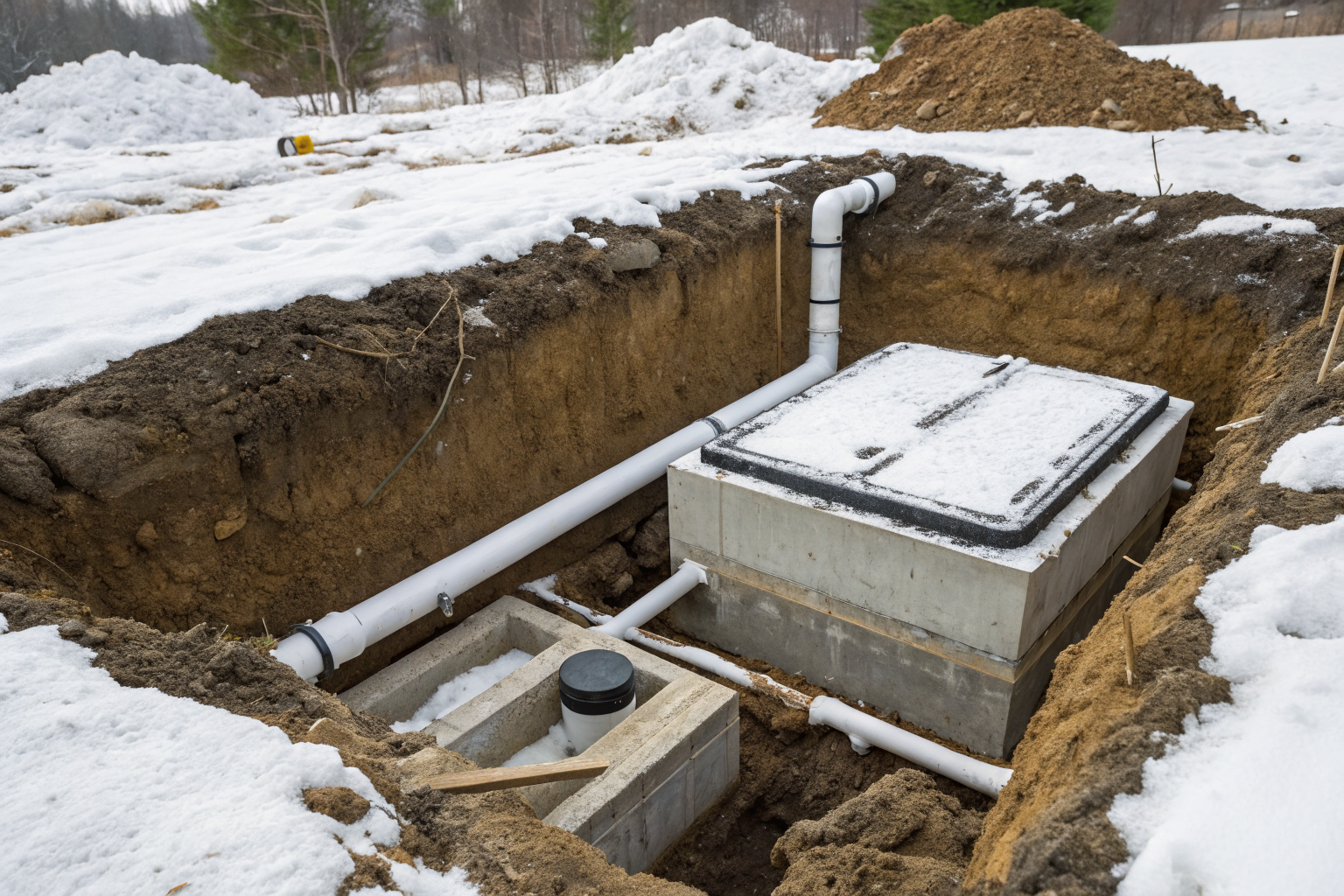
Distribution boxes freeze first because they sit closest to the surface and hold static water. These concrete or plastic boxes split wastewater flow between drainfield lines. When they freeze, your entire drainfield stops working.
Pipes carrying moving water resist freezing longer than static water. The inlet pipe from your house maintains some freeze protection from regular warm water flow. Outlet pipes and drainfield lines with intermittent flow freeze faster.
Shallow pump chambers create expensive freeze damage. Homes with mound systems or challenging terrain often use pump chambers buried 3-4 feet deep. These electrical components cost more to replace and repair than gravity-fed systems.
Septic tanks themselves almost never freeze completely. The large water mass, soil insulation, and bacterial heat generation keep tank contents liquid. However, the inlet and outlet connections to the tank can freeze, blocking all system function.
Cost varies by accessibility and component type. Simple pipe thawing runs $400-800. Full drainfield repair after freeze damage hits $1,500-3,500. Pump chamber replacement tops $2,000 because it requires electrical work and specialized equipment.
How to Insulate Your Septic System for Winter

• Apply 8-12 inches of mulch over your tank and distribution box areas. Use straw, leaves, or wood chips — never hay, which compacts and reduces insulation value. Mulch traps air and prevents ground frost penetration.
• Let snow accumulate naturally over your septic system areas. Each inch of snow provides R-1.5 insulation value. Twelve inches of snow equals the protection of standard foam board insulation. Never plow or shovel directly over system components.
• Cover exposed pipes and risers with insulated blankets designed for septic systems. These specialized covers resist moisture and provide R-10 to R-15 protection. Standard household blankets absorb water and lose insulation value.
• Install rigid foam insulation around distribution boxes and pump chambers. Cut foam board to fit around (not on top of) these components. Secure with landscape fabric to prevent wind displacement.
• Add extra soil over shallow pipes identified during inspection. Build up low areas to ensure 24-inch minimum coverage over all pipes. Use clean fill dirt, not topsoil with organic matter that settles.
• Plant grass over your drainfield for additional ground cover. Established grass roots create air pockets that boost soil insulation. Avoid deep-rooted plants that might damage pipes.
Never use plastic sheeting or tarps directly over septic components. These materials trap moisture and create freeze conditions worse than no insulation. Never park vehicles or place heavy objects over insulated areas — compressed insulation loses effectiveness.
Warning: Some insulation materials attract rodents. Check monthly for animal damage and replace chewed materials immediately.
Why Vacant Homes Face Higher Septic Freeze Risk

| Property Type | Daily Water Flow | Ground Insulation | Freeze Risk Level |
|---|---|---|---|
| Occupied Year-Round | 200-400 gallons | House heat radiates down | Low (8% annually) |
| Weekend/Seasonal | 0-50 gallons | Minimal heat transfer | High (67% annually) |
| Vacant/For Sale | 0 gallons | No heat from structure | Very High (85% annually) |
| Winterized Properly | 0 gallons | Mechanical protection | Moderate (25% annually) |
Vacant properties lose the two main freeze protections: regular warm water flow and ground heat from the house. Occupied homes push 200-400 gallons of heated wastewater through the system daily. This constant flow prevents ice formation even in sub-zero weather.
Seasonally occupied homes show 67% higher freeze rates than year-round residences. Cabins, vacation homes, and hunting properties face the worst risk because they sit empty during peak freeze months. Systems with no water flow for 30+ days show three times higher freeze incident rates.
Houses transfer heat into the ground around septic tanks and inlet pipes. Basements, crawl spaces, and heated foundations warm the soil 2-4 feet down. Vacant homes with no heating provide zero ground protection.
Pumping frequency changes for vacant properties. EPA septic system guidelines recommend pumping every 1-2 years for vacant homes vs 3-5 years for occupied homes. Lower water usage means less dilution of waste solids, creating thicker sludge that can freeze into solid blocks.
Proper winterization cuts freeze risk to 25%. This involves pumping the tank, adding antifreeze to fixtures, and insulating all exposed components. Professional winterization costs $300-500 but prevents $3,000+ in freeze damage.
What to Do When Your Septic Lines Freeze

Stop using all water immediately to prevent backing up frozen pipes. Turn off your water main if necessary. Adding more water to frozen pipes creates pressure that can burst pipes and flood your home.
Locate the frozen section by checking which fixtures drain properly. If toilets back up but sinks drain, the freeze likely affects the main outlet pipe. If nothing drains, suspect the inlet pipe from house to tank.
Apply heat to exposed pipe sections using electric heat tape or space heaters. Focus on pipes within 3 feet of the surface or near tank access points. Never use open flames, hair dryers, or heat guns — these can crack pipes.
Pour hot water down fixtures connected to frozen pipes every 2-3 hours. Use near-boiling water in small amounts (1-2 gallons). This method works for partial freezes but takes 24-48 hours for complete blockages.
Call a professional if you find no exposed pipes or if DIY methods fail after 24 hours. Professional thawing uses steam or hot water pressure systems that clear blockages in 2-4 hours without pipe damage.
Add septic-safe antifreeze to fixtures once thawed to prevent refreezing. Use RV antifreeze (propylene glycol) rated for septic systems. Regular automotive antifreeze kills beneficial bacteria in your tank.
Schedule emergency pumping if your tank overflowed during the freeze. Backed-up waste in your house requires immediate professional cleanup and tank pumping to prevent health hazards.
Never use salt, chemicals, or automotive antifreeze to melt septic system ice. These materials kill the bacteria your system needs to function and can contaminate groundwater.
Warning: Attempting to thaw buried pipes with excessive heat can crack concrete tanks or melt plastic pipes. Professional equipment prevents this damage.