

Old Septic System: How to Assess and Manage an Aging System
Old septic system assessment reveals harsh truths about homes built before 1970. Most have septic systems with zero documentation — no permits, no as-builts, and often no clue what’s buried in your yard.
Key Takeaways:
- Systems installed before 1970 often lack permits and may be undersized cesspools rather than true septic tanks
- Steel tanks from the 1960s-1980s fail after 15-25 years, while concrete tanks can last 40+ years with proper maintenance
- Proactive replacement costs $15,000-25,000 vs emergency replacement at $20,000-35,000 due to damage containment and expedited permits
How Do You Determine the Age of a System With No Records?
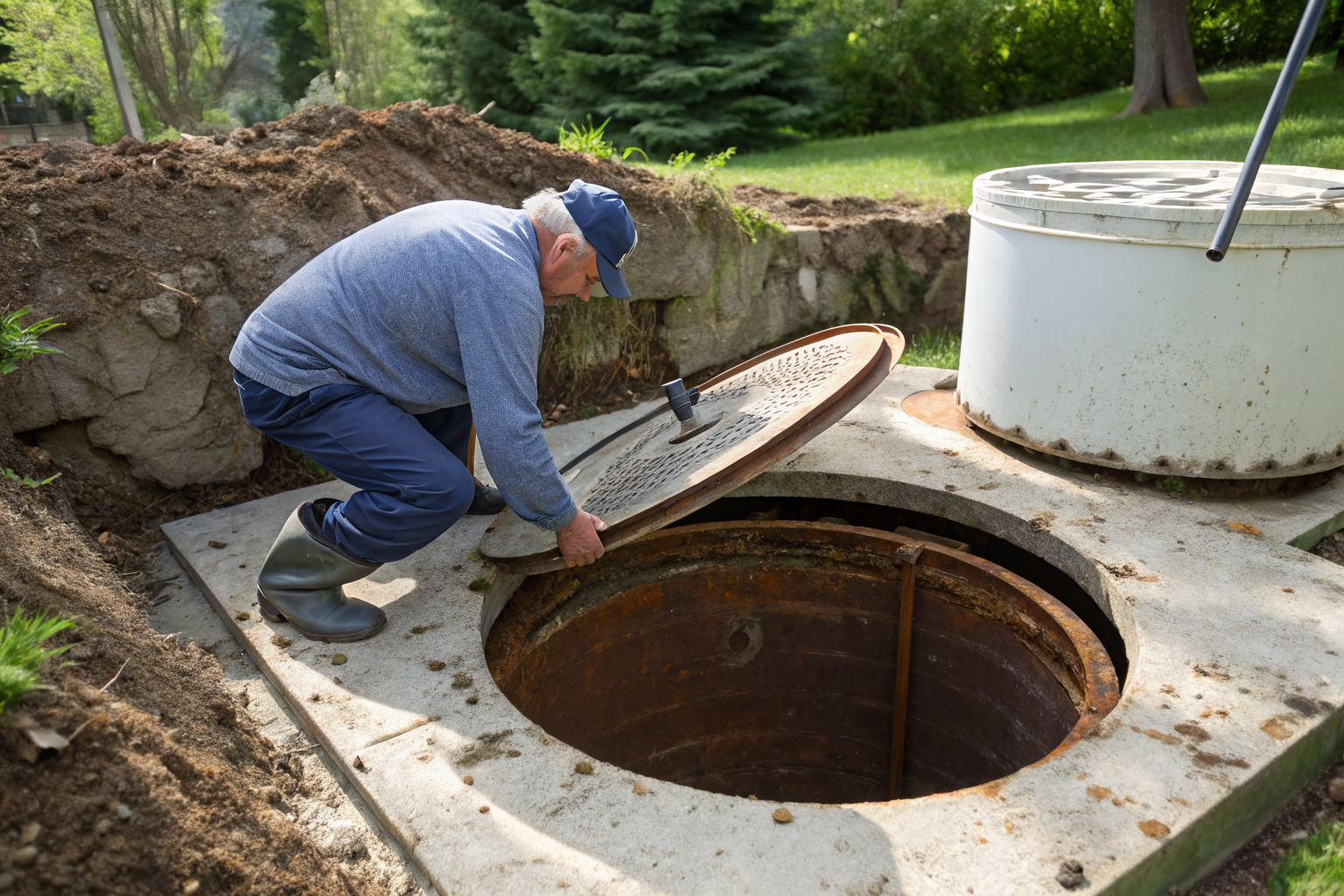
Homeowners identify septic system age through material and design clues when permits don’t exist. The State Health Department may have records, but many pre-1970 systems were installed without permits.
Locate and uncover the tank access ports. Steel tanks rust around the lid edges, creating orange staining. Concrete shows age through surface texture and aggregate type.
Examine the distribution box materials. Pre-1970 systems often lack distribution boxes entirely. Concrete boxes from the 1970s-1980s have square corners, while modern plastic boxes have rounded edges.
Check pipe materials at tank connections. Clay tile pipes indicate 1950s-1960s installation. Cast iron suggests 1960s-1970s. PVC wasn’t common until the 1980s.
Measure tank dimensions and wall thickness. Pre-regulation tanks were often undersized at 500-750 gallons. Modern tanks start at 1,000 gallons minimum.
Document the drainfield pipe layout. Old systems used single-line distribution without proper branching. Modern systems require multiple distribution lines with specific spacing.
Systems installed 1950-1970 used steel tanks, 1970-1990 used concrete, and 1990+ primarily plastic. Steel tank failure is predictable — rust-through occurs at the waterline after 15-25 years of use.
What Problems Define Each Era of Septic System Installation?
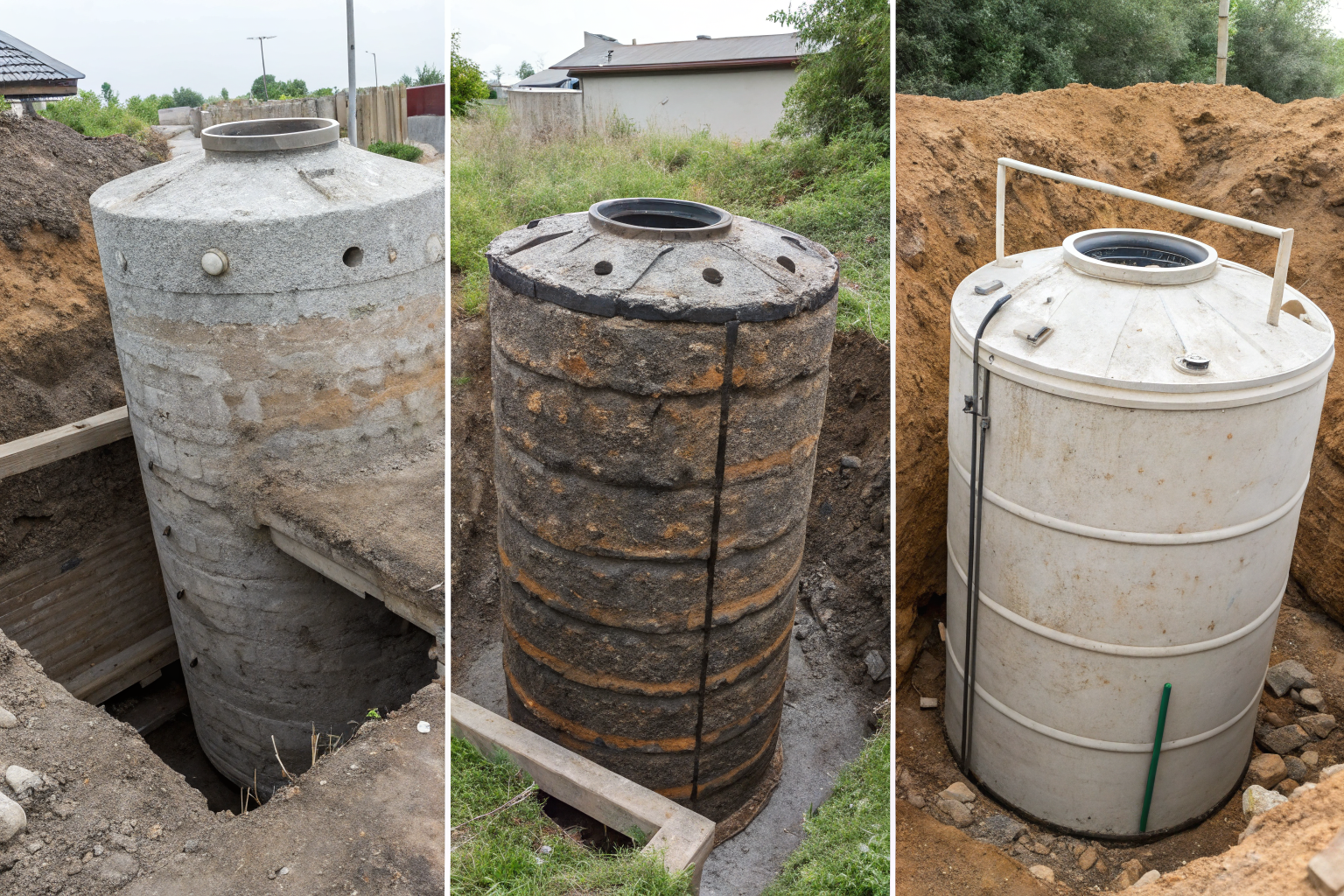
Pre-regulation systems create specific failure patterns by installation decade. Each era had different standards, materials, and understanding of soil science.
| Installation Era | Common Tank Material | Typical Problems | Drainfield Issues |
|---|---|---|---|
| 1950s-1960s | Steel, converted cesspools | Undersized capacity, no permits | Single pipe runs, no distribution box |
| 1970s-1980s | Concrete, some steel | Cracked concrete, steel corrosion | Shallow burial, poor soil testing |
| 1980s-1990s | Concrete, early plastic | Outlet baffle deterioration | Compacted soil from heavy equipment |
| 1990s-2000s | Plastic, advanced concrete | Plastic tank floating | Inadequate reserve area designation |
Systems from the 1950s-1960s were often cesspools converted to tanks without proper drainfield sizing. The conversion involved installing an outlet pipe in an existing cesspool, but the drainfield received no engineering. These “systems” fail quickly because the soil absorption area was never calculated for continuous use.
Steel tanks from the 1960s-1980s show predictable failure patterns. Interior corrosion starts at the waterline where hydrogen sulfide gas meets oxygen. Exterior corrosion attacks the bottom where groundwater contact occurs. Once rust-through begins, tank collapse follows within 2-3 years.
Concrete tanks from the 1970s-1980s crack at pipe connections due to poor installation techniques. Contractors often broke holes in finished tanks rather than forming proper ports during pouring. These cracks allow groundwater infiltration and effluent exfiltration.
The drainfield problems vary by era but share common themes. Pre-1970 systems lack distribution boxes, forcing all effluent through single pipe runs. This creates overloaded soil conditions and premature biomat formation.
When Should You Replace vs Repair an Aging Septic System?
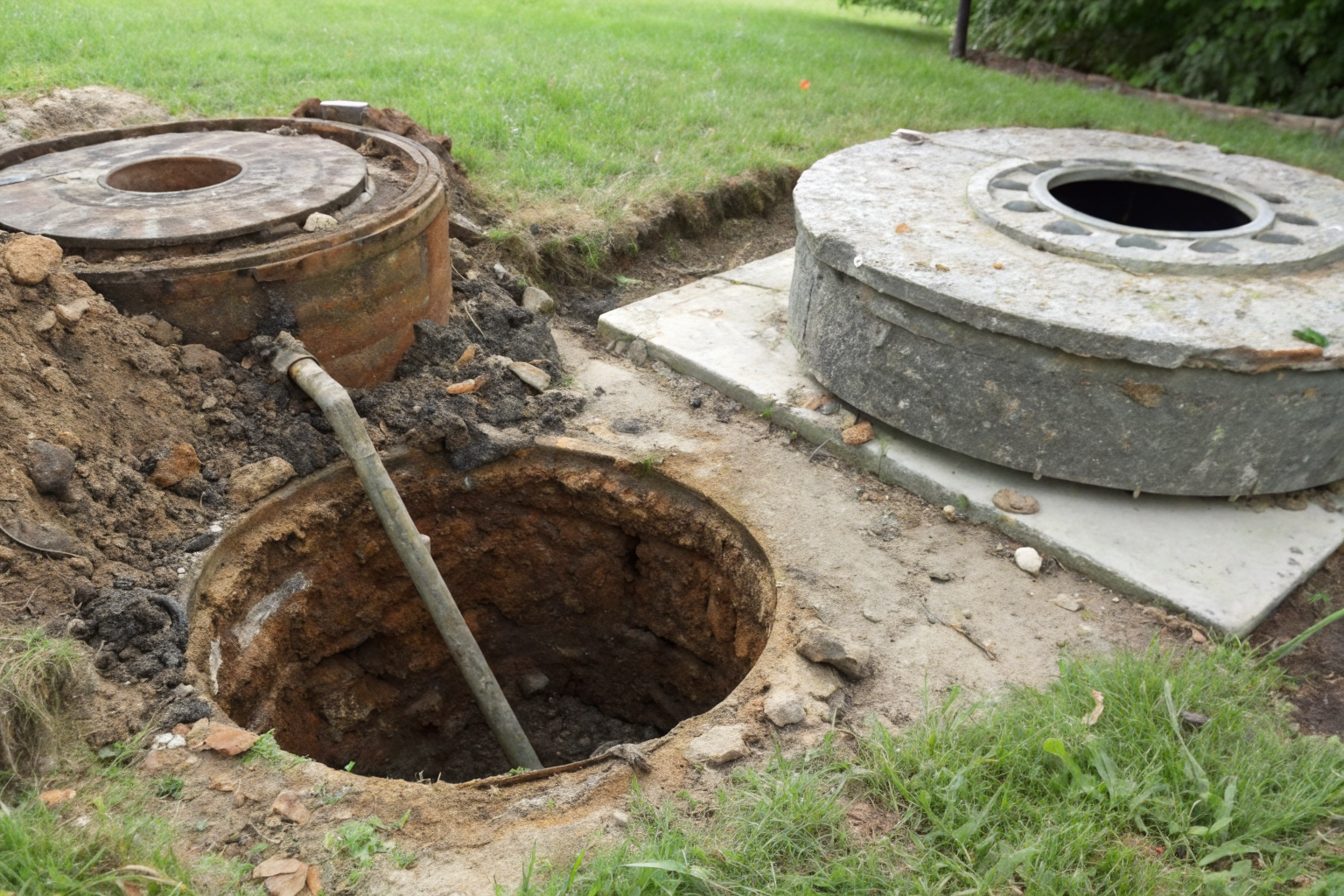
The repair vs replace decision depends on system age and failure severity. The calculation involves more than immediate costs — code compliance issues often force expensive upgrades during repairs.
| System Age | Tank Condition | Drainfield Status | Recommendation | Typical Cost |
|---|---|---|---|---|
| Under 20 years | Good | Minor issues | Repair components | $2,000-5,000 |
| 20-30 years | Fair | Moderate problems | Repair if under 50% replacement cost | $5,000-12,000 |
| 30-40 years | Poor | Significant issues | Replace unless emergency repair | $15,000-25,000 |
| Over 40 years | Failed/failing | Critical problems | Replace immediately | $20,000-35,000 |
Repairs exceeding 50% of replacement cost indicate full system replacement is more cost-effective. But the calculation includes hidden costs. Repairing old systems often triggers code compliance reviews that require expensive upgrades.
Steel tank replacement becomes mandatory once rust-through occurs. Patching steel tanks fails within months because corrosion spreads from patch edges. The tank structure weakens until collapse becomes inevitable.
Drainfield setback distance requirements create the biggest replacement trigger. Modern codes require 100+ feet from wells, but pre-1970 systems often sit 25-50 feet away. Repairing these systems may require relocating the entire drainfield to meet current setbacks.
Reserve area designation also forces replacement. Modern codes require designated reserve drainfield areas for future expansion or replacement. Pre-regulation systems used all available space, leaving no room for code-compliant alternatives.
What Code Violations Force Upgrades in Pre-1970s Systems?
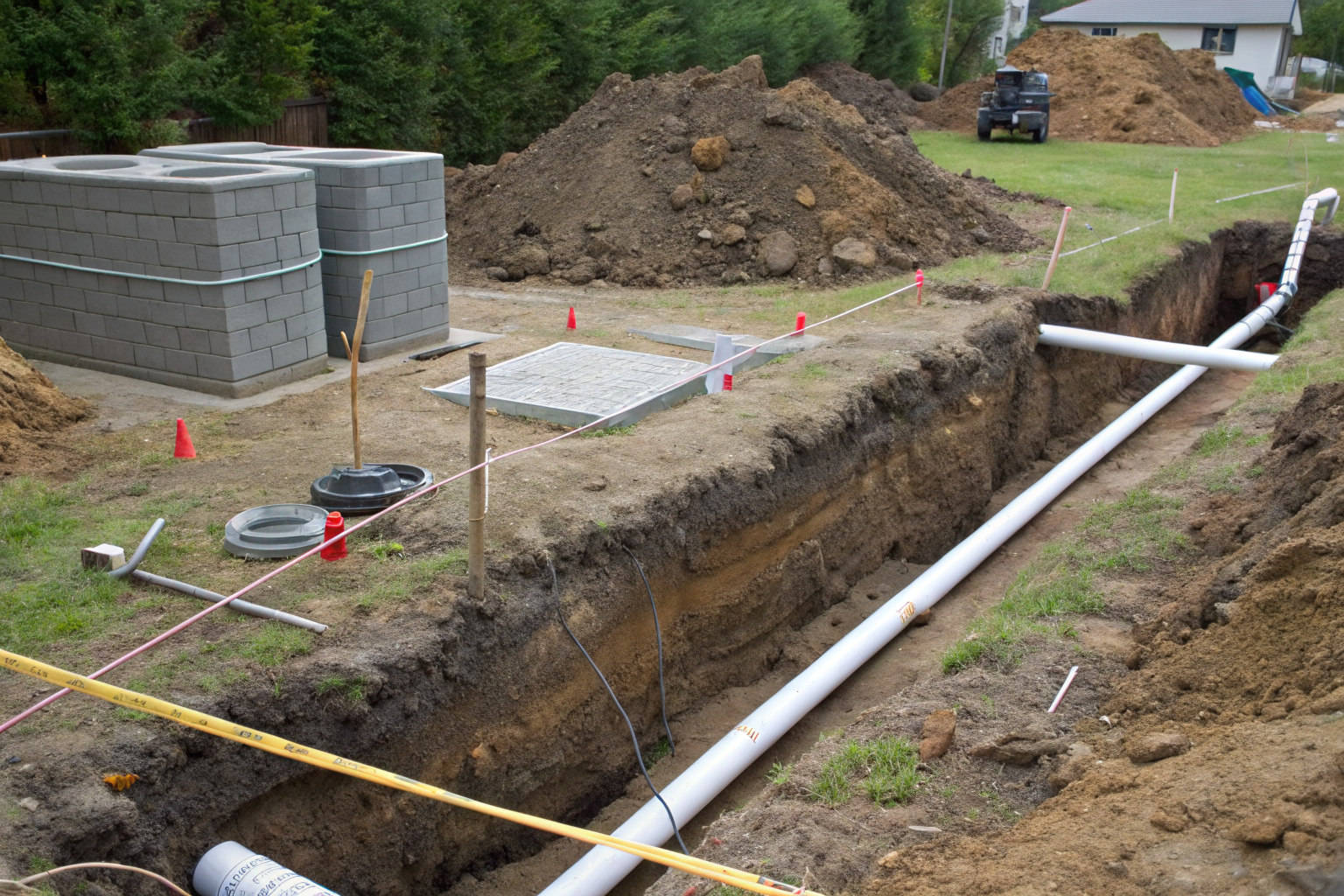
Modern regulations require upgrades that pre-regulation systems cannot meet. The Septic System Permit process now includes compliance reviews that identify violations requiring correction.
• Setback distance violations from wells and property lines. Original 25-50 foot setbacks increased to 100+ feet in most states. Systems violating current setbacks face mandatory relocation during any major repair.
• Tank capacity requirements based on bedroom count. Pre-1970 tanks averaged 500-750 gallons regardless of house size. Modern codes require 1,000 gallons minimum, with increases for larger homes reaching 1,500+ gallons.
• Distribution box installation mandates. Systems lacking distribution boxes must add them during repairs. This requires excavation, pipe rerouting, and often drainfield modifications to accommodate proper effluent distribution.
• Reserve drainfield area designation requirements. Properties must designate 100% reserve area equal to the primary drainfield size. Pre-regulation systems using all available space cannot meet this requirement without property expansion or alternative system installation.
• Effluent filter installation requirements. Modern codes mandate outlet filters to prevent solids from reaching the drainfield. Adding filters to old tanks often requires tank modifications or replacement due to incompatible outlet designs.
Drainfield Setback Distance increased from 50 feet to 100+ feet from wells between 1970-1990 in most states. The change reflected better understanding of groundwater contamination risks, but it rendered thousands of existing systems non-compliant.
Code enforcement varies by jurisdiction, but repair permits trigger compliance reviews. Minor repairs like pumping or filter replacement rarely face scrutiny, but tank or drainfield work opens the entire system to modern code requirements.
How Do You Plan System Replacement on Properties With No Reserve Area?
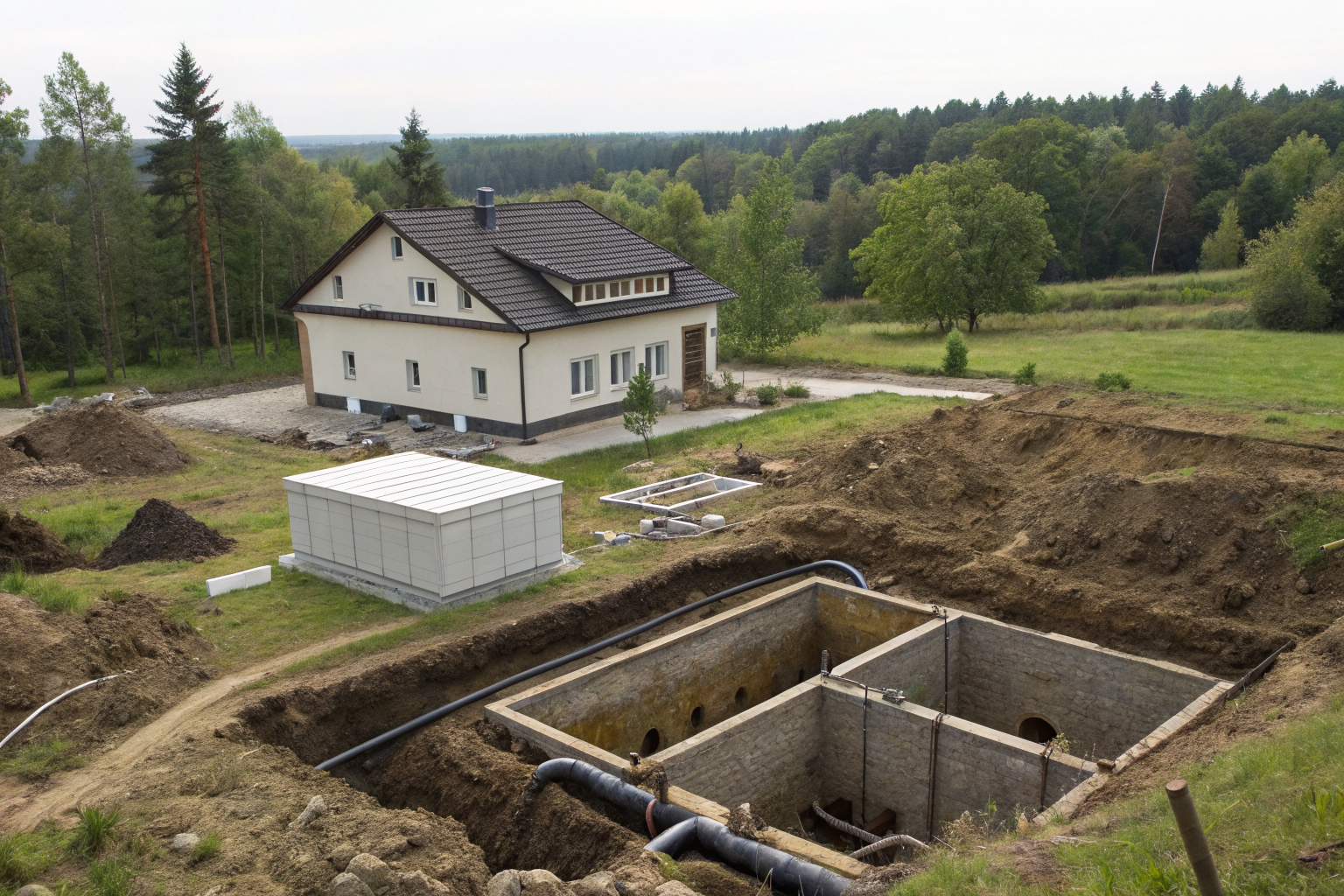
Space-constrained properties require alternative system designs or variance approvals when original installation used all available space. Vacation Property Septic systems face particular challenges because seasonal use doesn’t reduce space requirements under most codes.
Mound systems provide the primary alternative for space-constrained sites. These systems build the drainfield above ground using imported sand and gravel, but they require 2-3x more space than conventional systems. The mound footprint includes the absorption area plus required setbacks from the elevated structure.
Alternative system technologies offer space-saving options at higher costs. Advanced treatment units reduce drainfield size requirements by 25-50% through enhanced effluent treatment. Constructed wetlands, sand filters, and proprietary treatment systems qualify under most state alternative system programs.
Variance procedures allow non-conforming installations when no alternatives exist. The State Health Department reviews variance applications requiring engineering studies, soil testing, and demonstration that standard systems cannot function on the property. Variance approvals often include monitoring requirements and use restrictions.
New Construction Septic planning avoids these problems through proper site evaluation before building. But existing homes with inadequate space face expensive solutions or property use restrictions.
Property line setback waivers provide another option when neighboring properties agree. Some states allow reduced setbacks with written neighbor consent and additional system safeguards like enhanced treatment or monitoring.
The worst-case scenario involves connecting to municipal systems when available. Sewer connection costs range $10,000-25,000 plus monthly fees, but it eliminates septic system replacement needs permanently.