

How Long Does a Septic System Last: Lifespan by System Type
How long does a septic system last depends on which component fails first. Your septic tank might last 40 years while your drainfield fails at 20 — knowing which component ages first determines whether you’re budgeting for repair or replacement.
Key Takeaways:
- Concrete septic tanks last 40+ years, but plastic tanks fail at 15-20 years under identical conditions
- Drainfields fail 10-15 years before tanks, making them your system’s weak link for replacement planning
- Regular pumping extends system life by 5-10 years, while neglect cuts lifespan in half
How Long Do Different Septic Tank Materials Last?
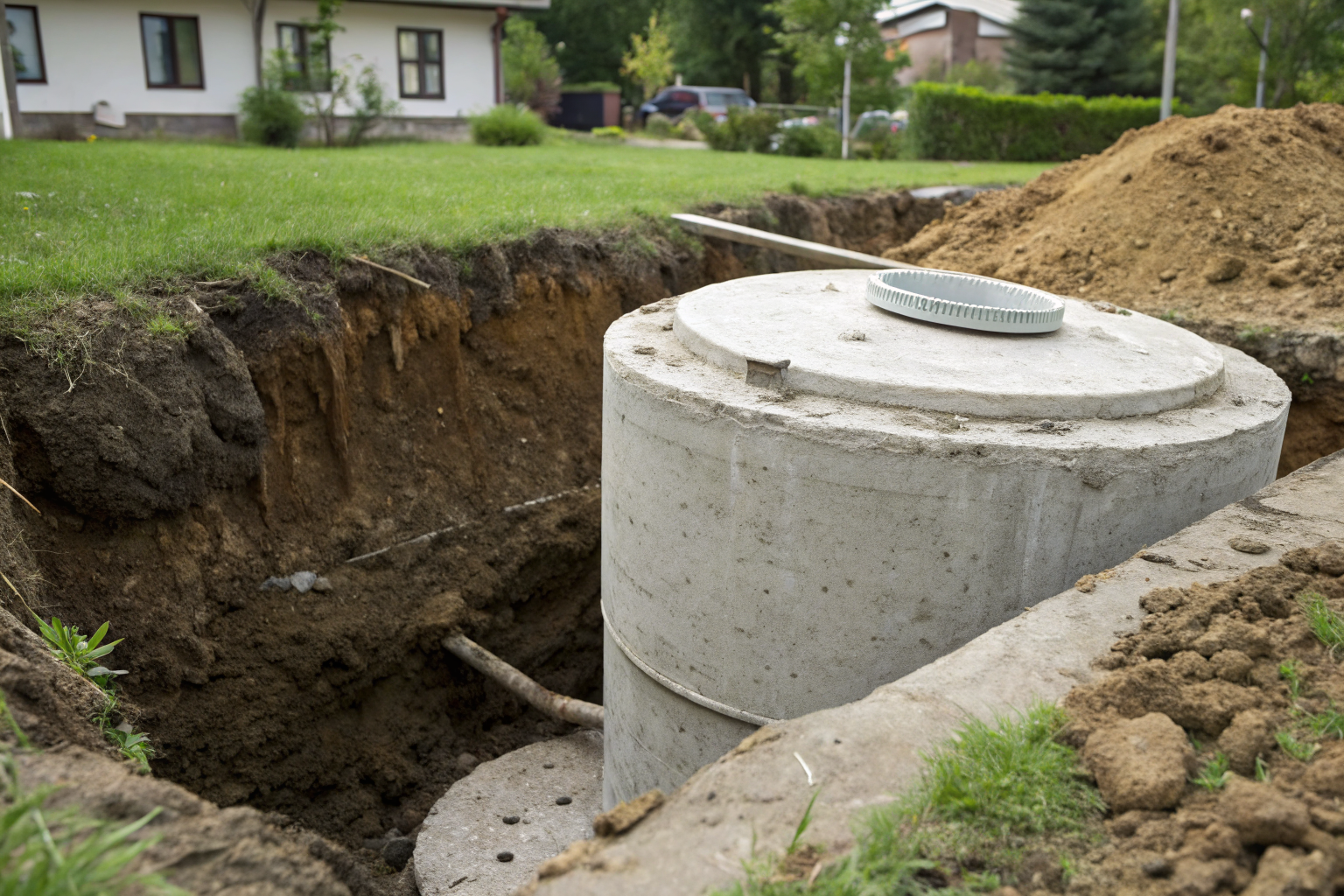
Septic tanks outlive every other system component. Concrete septic tanks last 40 to 50 years in most environments. The material choice determines whether you’re replacing the tank once or three times during your home ownership.
| Tank Material | Expected Lifespan | Common Failure Points | Replacement Cost |
|---|---|---|---|
| Concrete | 40-50 years | Cracking, inlet/outlet damage | $1,500-$3,000 |
| Plastic | 15-20 years | UV damage, structural failure | $800-$1,500 |
| Fiberglass | 20-30 years | Cracking under load, flotation | $1,200-$2,200 |
| Steel | 15-25 years | Rust, corrosion | $1,000-$2,000 |
Concrete dominates the longevity game because it doesn’t degrade from household chemicals or temperature changes. Plastic tanks crack when the ground shifts. Fiberglass splits under the weight of saturated soil. Steel corrodes from the inside out.
Environmental factors accelerate tank failure. High water tables cause plastic and fiberglass tanks to float, cracking inlet and outlet connections. Acidic soil eats through steel faster than alkaline conditions. Clay soil that expands and contracts during freeze-thaw cycles puts stress on all tank materials.
The tank material you choose sets your replacement timeline. Install concrete once and forget it for decades. Go with plastic and plan for replacement within 20 years. Most contractors push plastic because it’s easier to install — not because it lasts longer.
What Determines Your Drainfield Life Expectancy?
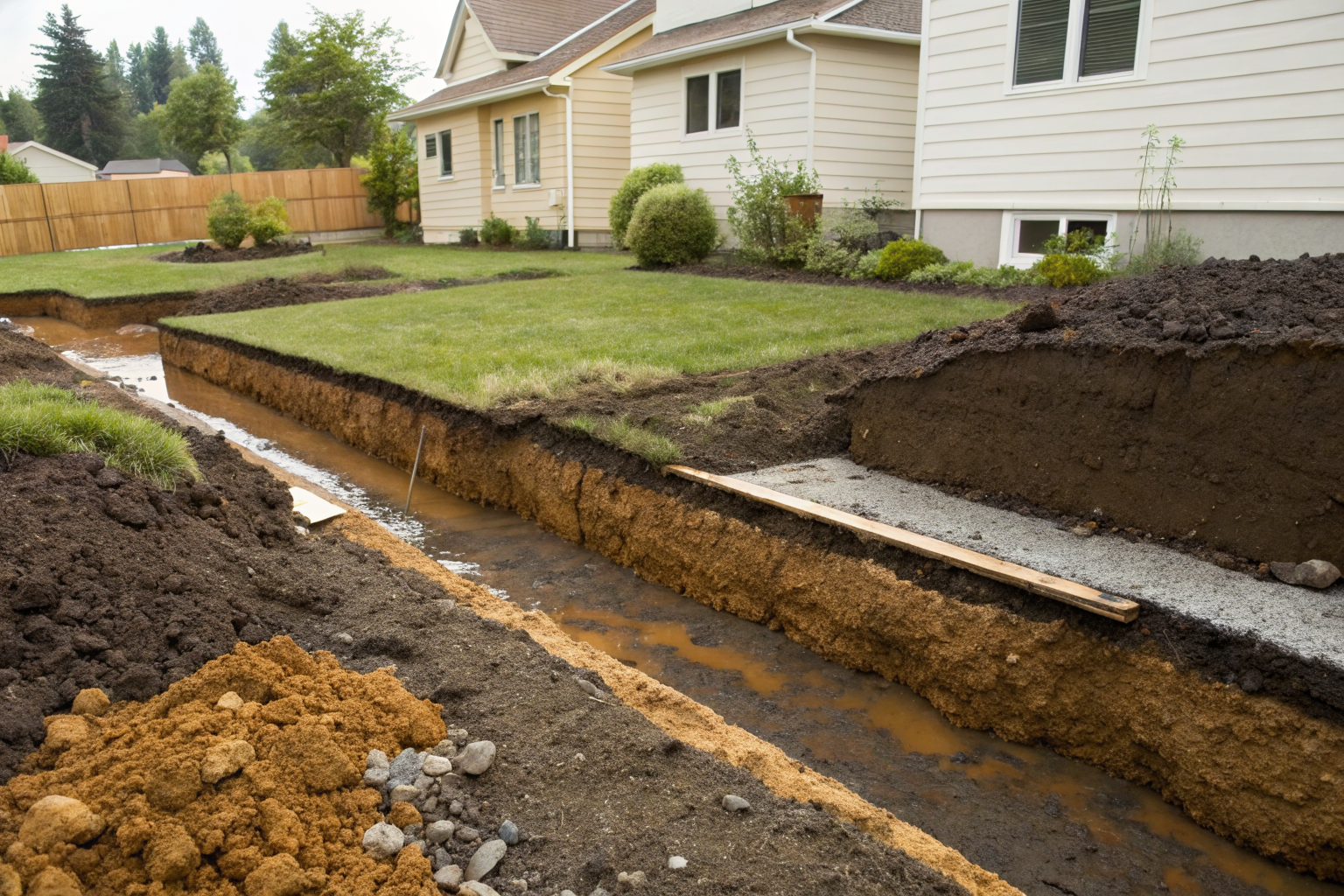
Drainfields fail within 20-25 years under ideal conditions. This makes them your septic system’s weak link. Soil type, water usage patterns, and maintenance determine whether your drainfield reaches that upper limit or fails at 10 years.
Factors that control drainfield lifespan:
Soil composition dictates drainage speed — Sandy soil allows proper effluent filtration, while clay soil causes backup and system failure within 10-15 years.
Hydraulic overload kills drainfields faster than age — Washing machines, dishwashers, and multiple showers in short periods flood the soil beyond its absorption capacity.
Biomat formation blocks soil pores over time — This bacterial layer that forms naturally becomes impermeable after 15-20 years, preventing proper drainage.
System sizing affects longevity — Undersized drainfields work harder and fail sooner, while properly sized systems can reach their full 25-year potential.
Clay soil cuts drainfield life in half. The dense particles don’t allow proper drainage, causing effluent to back up into the tank and eventually surface in your yard. Sandy loam provides the ideal balance of filtration and drainage.
Biomat formation is inevitable but controllable. This sticky bacterial layer grows thicker each year until it blocks soil pores completely. Regular pumping slows biomat development by reducing the organic load reaching the drainfield.
The drainfield determines your replacement timeline because tank repairs cost hundreds while drainfield replacement costs thousands.
When Should You Repair vs Replace Your Septic System?
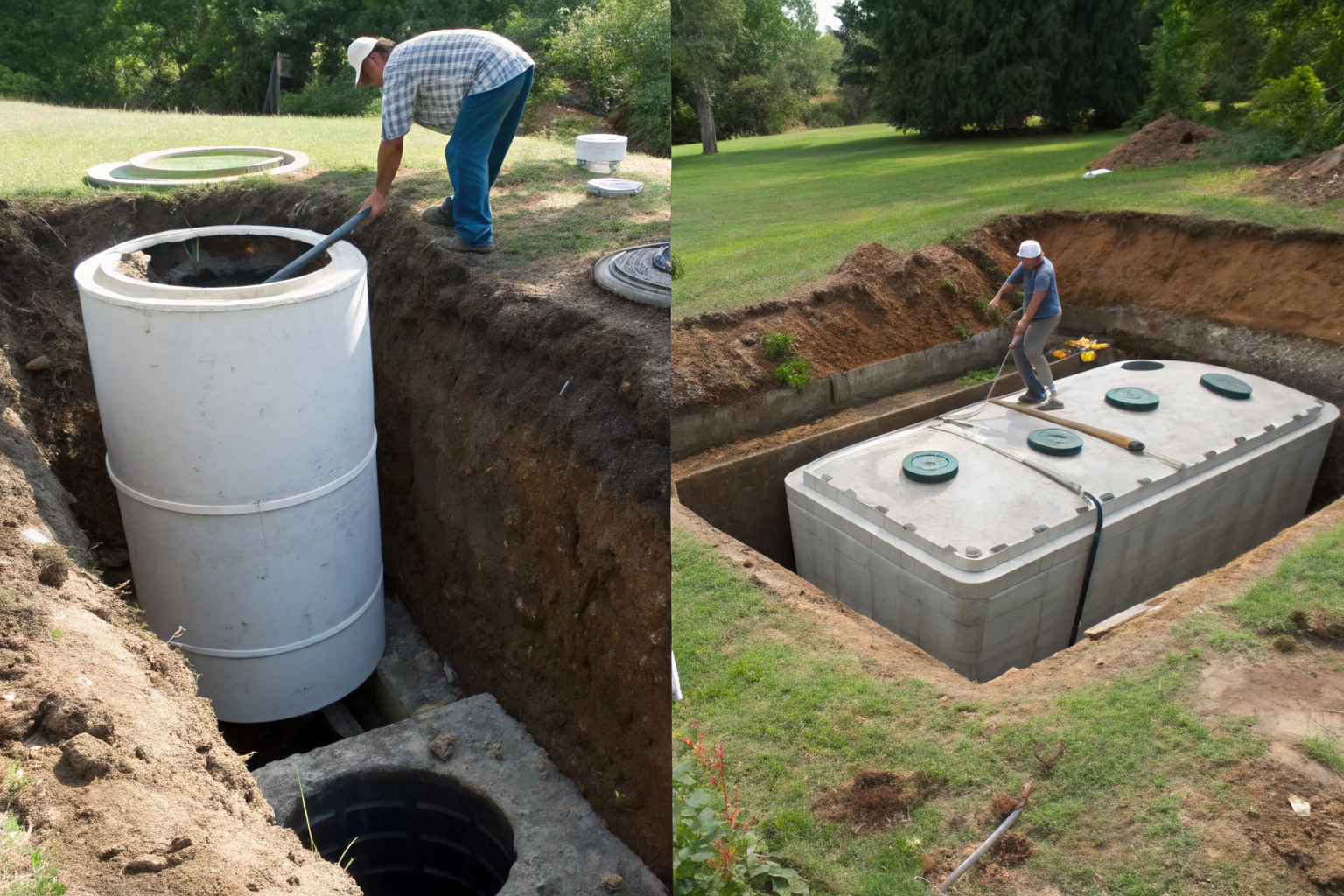
Tank-only replacement costs 30-40% less than full system replacement when the drainfield remains functional. The decision comes down to component age and failure patterns.
| Scenario | Repair Cost | Replace Cost | Best Choice |
|---|---|---|---|
| Tank cracked, drainfield working | $2,000-$4,000 | $8,000-$15,000 | Replace tank only |
| Drainfield saturated, tank intact | $6,000-$12,000 | $8,000-$15,000 | Replace entire system |
| Both components aged 20+ years | $8,000-$16,000 | $8,000-$15,000 | Replace entire system |
| Tank 10+ years old, drainfield failing | $6,000-$12,000 | $8,000-$15,000 | Replace entire system |
Replace just the tank when it’s the only failed component and the drainfield still percolates properly. This works when concrete tanks crack from age but the soil absorption system functions normally.
Replace the entire system when the drainfield fails. Installing a new drainfield requires excavation that often damages tank connections anyway. The marginal cost of a new tank during drainfield replacement is minimal.
System age guides the decision when multiple components show wear. If your tank is over 20 years old and the drainfield starts backing up, replace everything. Partial repairs on aged systems just delay the inevitable full replacement.
Septic System Capacity Limits also factor into replacement decisions. Adding bathrooms or increasing household size might require a larger system regardless of current component condition.
How Does Maintenance Extend Septic System Life?
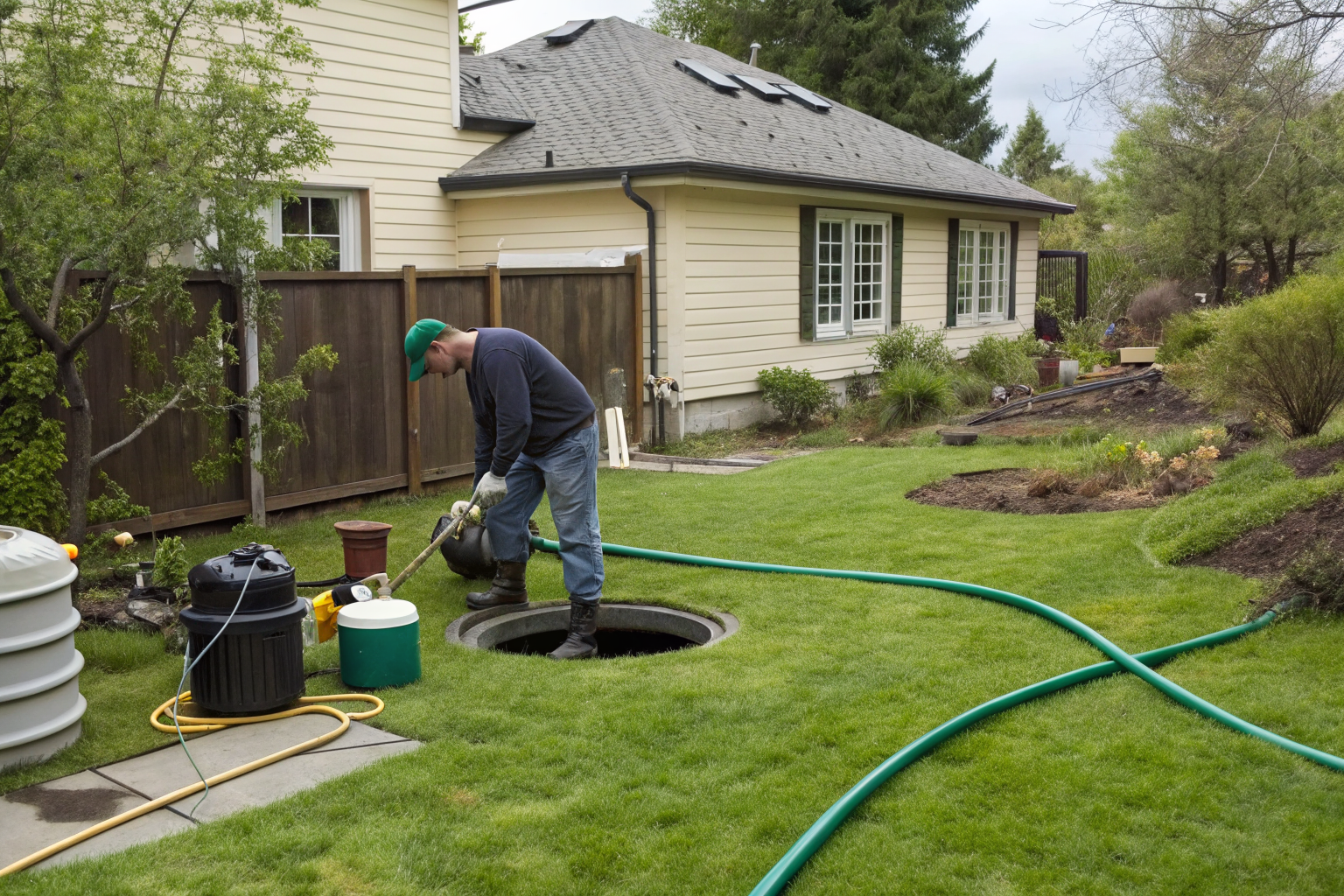
Regular pumping extends lifespan by 5-10 years compared to crisis-only maintenance. The EPA Septic System Guidelines recommend pumping every 3-5 years, but the payoff goes beyond avoiding backups.
Maintenance steps that add years to system life:
Pump every 3-5 years to prevent biomat overgrowth — Removing accumulated solids reduces the organic load reaching your drainfield and slows bacterial layer formation.
Inspect tank connections annually — Cracked inlet and outlet baffles cause premature drainfield failure when solids escape the tank.
Monitor drainfield for soggy spots or odors — Early detection of saturation problems allows for system rest periods that can restore soil absorption.
Keep detailed maintenance records — Documentation helps identify patterns and proves proper care for warranty claims or property sales.
Pumping frequency determines system longevity more than any other factor. Systems pumped every 3 years consistently reach their maximum lifespan. Those pumped only when problems occur typically fail 5-10 years early.
Skipped maintenance creates a cascade of failures. Excess solids flow to the drainfield, accelerating biomat formation. The soil becomes saturated, forcing effluent back toward the house. What started as a $300 pumping bill becomes a $10,000 system replacement.
Proper maintenance records also affect resale value and warranty coverage. Buyers pay more for systems with documented care, and manufacturers void warranties for systems without regular pumping.
What Factors Cut Your Septic System Lifespan in Half?
Water softener discharge reduces drainfield life by 40% due to sodium buildup and hydraulic overloading. High-volume water usage and chemical damage create the perfect storm for premature system failure.
Excessive water volume overwhelms soil absorption capacity. Septic System Load Calculations assume normal household water usage of 50-75 gallons per person daily. Families using 150+ gallons per person flood their drainfields beyond recovery.
Water softeners create two problems. The sodium in regeneration cycles changes soil chemistry, making clay particles swell and block drainage. The discharge volume — often 50-100 gallons during regeneration — hydraulically overloads the system when combined with normal household usage.
Household chemicals accelerate component failure. Bleach, antibacterial soaps, and drain cleaners kill beneficial bacteria in the tank and drainfield. Without these microorganisms, solid waste doesn’t break down properly, clogging the system faster.
Poor installation cuts lifespan before the system even starts working properly. Undersized drainfields work at maximum capacity from day one. Improper grading causes uneven effluent distribution. Compacted soil from construction equipment reduces absorption permanently.
Geographic factors matter more than most homeowners realize. Areas with high seasonal water tables flood drainfields annually, preventing proper soil drying. Rocky soil prevents proper system sizing. Steep slopes cause effluent to flow away before filtration occurs.
System overloading is the fastest way to guarantee early failure. Adding bathrooms without expanding capacity, installing garbage disposals, or increasing occupancy beyond design limits pushes components past their breaking point.
Avoiding these lifespan killers requires conscious choices about water usage, chemical products, and system modifications. The decisions you make daily determine whether your system reaches its design life or fails years early.