
How Septic Systems Work: Types, Components, and the Basics Every Homeowner Needs
Understanding how septic systems work becomes critical when your home processes 80 gallons of wastewater per person daily without you thinking about it — until something goes wrong.
Key Takeaways:
• Septic systems treat wastewater through 3 distinct biological and physical processes over 24-48 hours
• Conventional gravity systems handle 90% of residential installations but require specific soil conditions
• The drainfield performs 70% of actual water treatment while the septic tank only separates and stores
What Are the 3 Main Stages of Septic System Treatment?
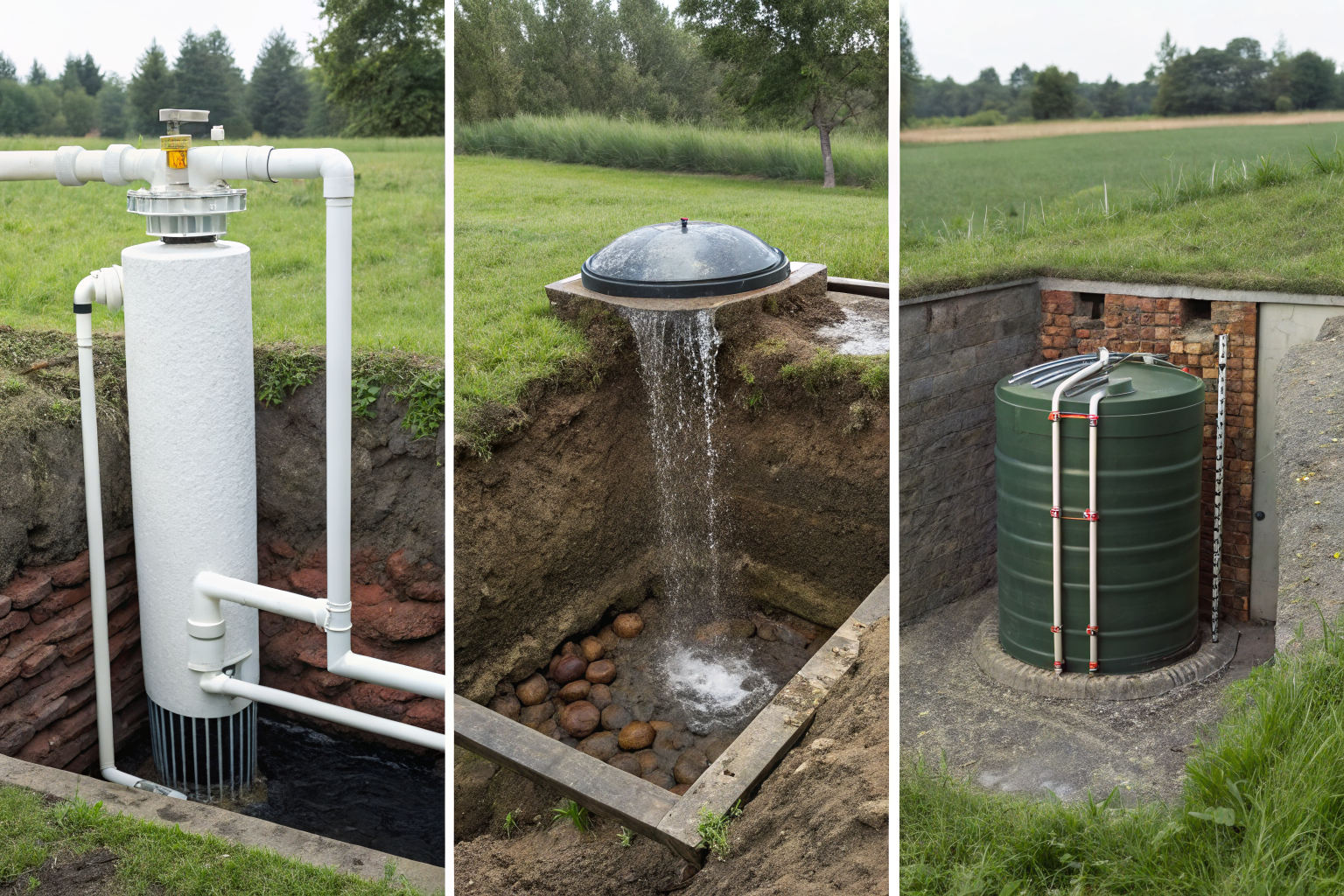
Septic systems process wastewater through three treatment stages that transform raw sewage into clean groundwater. Each stage removes different contaminants through distinct biological and physical mechanisms.
Primary Treatment in the Septic Tank. Raw wastewater enters the tank where gravity separates solids from liquids over 24-48 hours. Heavy solids sink to form the sludge layer while oils and grease float to create scum. Anaerobic bacteria break down organic matter in both layers, reducing solid volume by 50-60%. The middle liquid layer becomes effluent ready for secondary treatment.
Secondary Treatment in the Drainfield. Effluent flows from the septic tank to the distribution box, which spreads it across perforated pipes buried in gravel trenches. Soil acts as a biological filter where aerobic bacteria consume remaining organic matter. This stage removes 85-95% of harmful bacteria and viruses while filtering nutrients and chemicals.
Tertiary Treatment Through Deep Soil. Water continues filtering through deeper soil layers before reaching groundwater. Clay and sand particles trap remaining contaminants through physical and chemical processes. Some systems include additional treatment components like sand filters or constructed wetlands for enhanced cleaning.
The entire process takes 2-7 days depending on soil conditions and system design. Temperature affects treatment efficiency — bacteria work slower in winter, requiring longer retention times. Systems in colder climates need deeper installations to prevent freezing.
Each treatment stage depends on the previous one working correctly. Tank problems create drainfield failures. Drainfield issues cause groundwater contamination. Most homeowners only notice problems when stage three fails and sewage appears at ground level.
Septic Tank Components: What Does Each Part Actually Do?
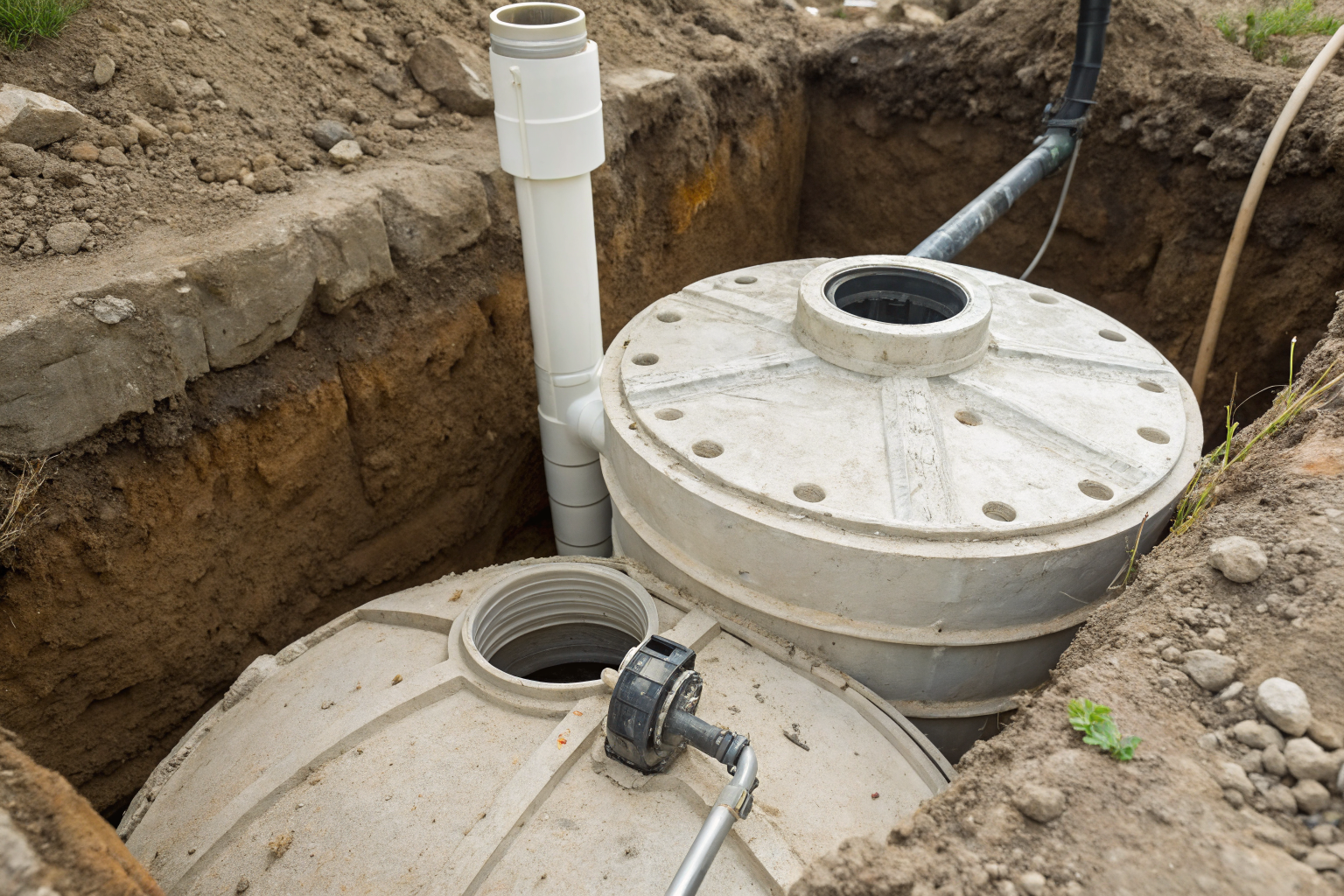
Septic tank components perform specific functions in wastewater treatment through coordinated mechanical and biological processes. Each element serves a distinct purpose in the primary treatment phase.
The inlet baffle controls wastewater entry to prevent disturbing settled solids. Water enters through a tee or baffle that directs flow downward, creating a calm zone for separation. Exit velocity must stay below 0.5 feet per second to maintain proper settling. Damaged inlet baffles cause solids to flow directly to the drainfield.
| Component | Primary Function | Failure Signs |
|---|---|---|
| Inlet Baffle | Directs flow, prevents scum disturbance | Drainfield clogs within 2 years |
| Outlet Baffle | Blocks solids exit, controls effluent level | Sewage odors, visible solids in distribution box |
| Tank Compartments | Separate treatment stages, increase retention | Rapid sludge buildup, poor effluent quality |
| Access Ports | Allow pumping, inspection, maintenance | Sewage backup from missed pumping |
| Distribution Box | Spreads effluent evenly across drainfield | Wet spots, uneven grass growth |
Two-compartment tanks provide better treatment than single chambers. The first compartment handles 60-75% of solids removal while the second polishes effluent quality. Baffles between compartments prevent solids transfer while maintaining hydraulic connection.
Access ports must reach within 6 inches of ground level for proper maintenance. Buried access ports cost $500-800 to locate and expose during pumping. Risers installed during construction save money and enable regular inspection.
Standard residential tanks range from 750-1,500 gallons based on household size. Tank capacity affects retention time and treatment quality. Undersized tanks cause solids carryover to the drainfield. Oversized tanks work better but cost more upfront.
Concrete tanks last 40+ years while plastic and fiberglass units need replacement after 20-30 years. Tank material affects bacterial environment and structural integrity. Concrete provides better insulation for bacterial activity in cold climates.
The distribution box connects the septic tank to drainfield pipes through multiple outlets. Proper leveling ensures equal flow distribution — a 1/4-inch slope difference can send 75% of effluent to one drainfield section. Uneven distribution creates wet spots and premature system failure.
How Does Your Drainfield Actually Clean Water?
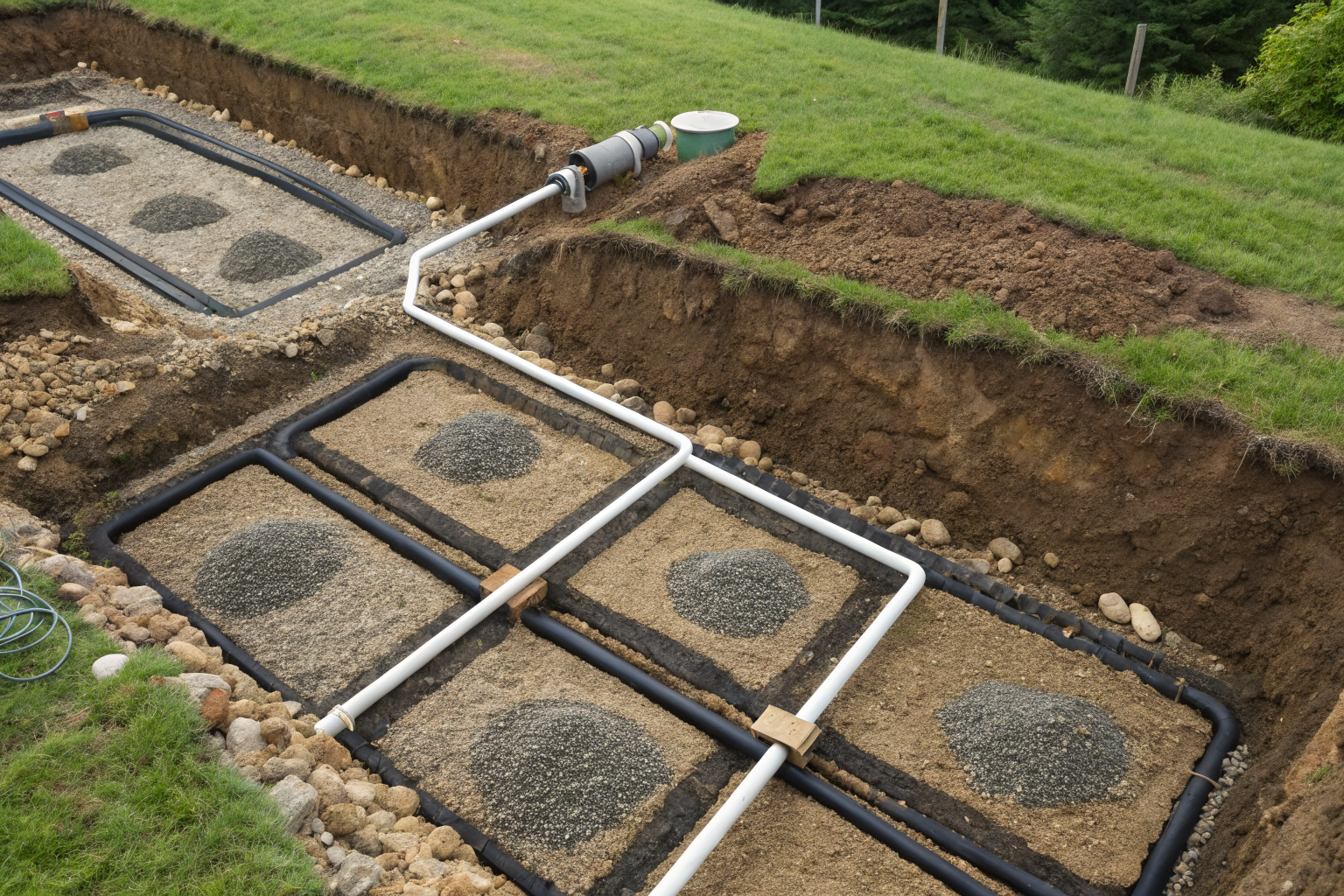
Drainfield is the network of perforated pipes and gravel beds that filters septic tank effluent through soil layers. This means the drainfield performs the actual water cleaning while the septic tank only separates and stores waste.
Effluent flows through distribution pipes with holes spaced 2-3 feet apart. Gravel surrounds the pipes to create air space for aerobic bacteria growth. These bacteria need oxygen to break down organic compounds that anaerobic bacteria in the septic tank cannot process.
Soil layers below the gravel act as biological and physical filters. Clay particles remove bacteria and viruses through electrostatic attraction. Sand provides mechanical straining of remaining solids. Organic matter in topsoil feeds beneficial bacteria that process nutrients.
Perc tests determine how fast water moves through soil — the critical factor in drainfield design. Soil that drains too fast fails to filter contaminants. Soil that drains too slowly creates surface ponding and system backup. Effective drainfields require soil percolation rates between 5-60 minutes per inch.
Soil composition matters more than system size for treatment quality. Clay-rich soils with 15-30% content provide optimal filtering without excessive retention. Sandy soils need larger drainfield areas to achieve equivalent treatment. Rocky or impermeable soils cannot support conventional drainfields.
Vertical separation between drainfield pipes and groundwater affects treatment capacity. Most codes require 2-4 feet of unsaturated soil for bacterial action. Seasonal high water tables reduce this separation and compromise filtration.
Drainfield pipes slope 1-2 inches per 100 feet to ensure even distribution. Steeper slopes create uneven loading with wet and dry zones. Level pipes cause ponding at the distribution end. Proper grading requires precision surveying during installation.
Biomat formation occurs naturally as bacteria and organic matter accumulate on soil surfaces around pipes. Thin biomats enhance filtration. Thick biomats block water infiltration and cause system failure. Biomat thickness depends on effluent quality and soil conditions.
Replacement drainfields cost $5,000-15,000 depending on soil conditions and site access. Soil testing during home purchases can identify future drainfield problems before they become expensive repairs.
Conventional vs Alternative Septic Systems: Which Type Do You Have?
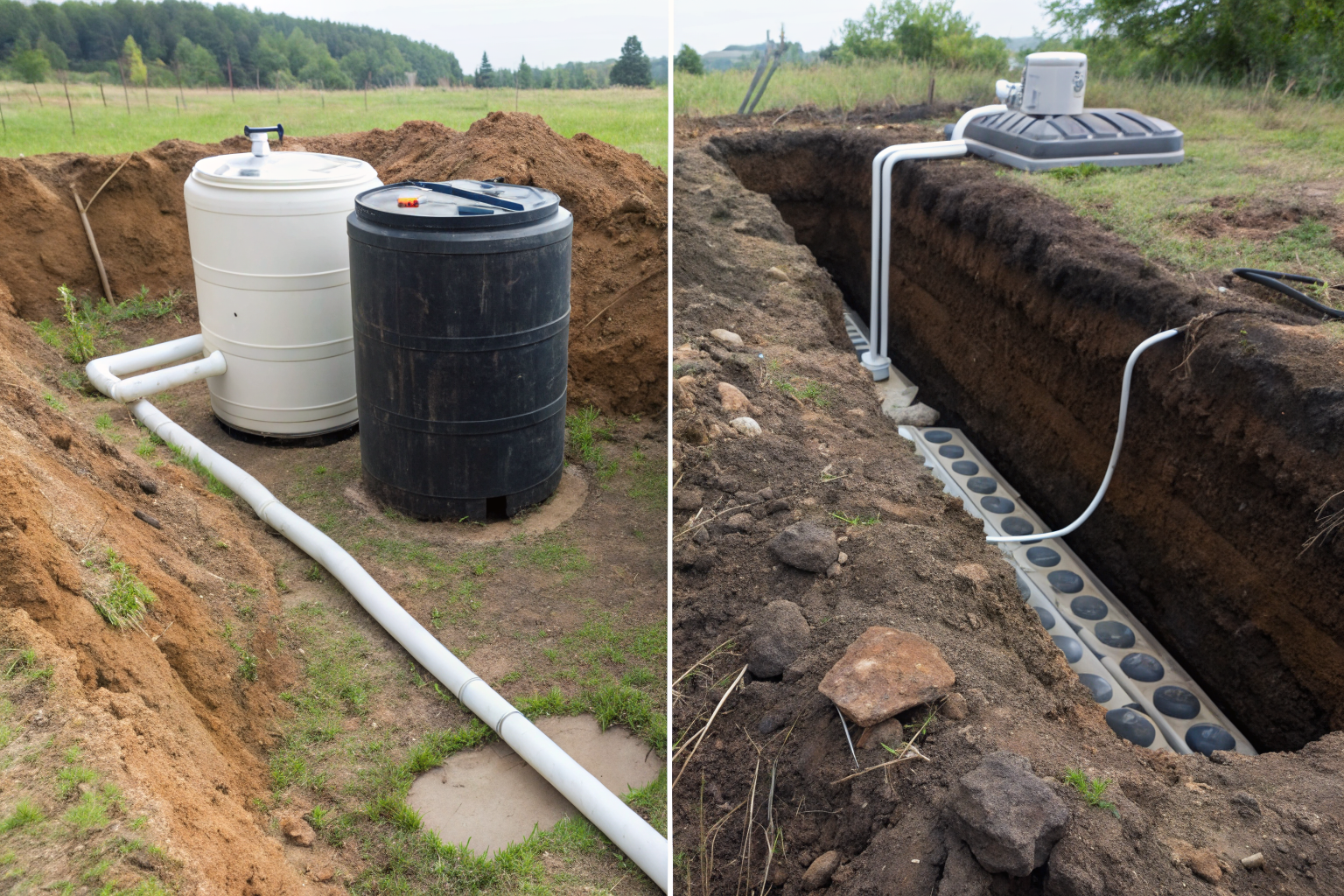
Alternative septic systems solve problems that conventional systems cannot handle when soil conditions fail standard requirements. Most homes use gravity-fed conventional systems, but challenging sites need engineered alternatives.
Conventional systems rely on gravity flow from septic tank to drainfield through naturally permeable soil. No electricity or mechanical components are required. Installation costs $3,000-8,000 for typical residential systems. These handle 90% of suitable building sites.
| System Type | Soil Requirements | Installation Cost | Maintenance Needs |
|---|---|---|---|
| Conventional Gravity | Perc rate 5-60 min/inch, 2+ ft to water table | $3,000-8,000 | Pump every 3-5 years |
| Pressure Distribution | Same as gravity but more even loading | $5,000-10,000 | Pump tank maintenance |
| Sand Filter | Any soil type, controlled environment | $8,000-15,000 | Media replacement every 10-15 years |
| Mound System | Slow or impermeable soil | $10,000-20,000 | Pump maintenance, biomat management |
| Constructed Wetlands | Variable soil, enhanced treatment | $12,000-25,000 | Plant management, seasonal monitoring |
Pressure distribution systems use pumps to force effluent through smaller-diameter pipes with precise hole spacing. Even loading prevents biomat problems in marginal soils. Pumps require electrical service and periodic replacement every 7-10 years.
Sand filter systems create controlled treatment environments using engineered sand beds. Effluent flows through 18-24 inches of specific sand gradation before reaching native soil. These work in any soil type but need sand replacement when clogged.
Mound systems build elevated drainfields above natural soil using imported sand and gravel. Pumps deliver effluent to the top of the mound for downward filtration. Mounds work in slow-percolating or high-water-table conditions but require careful design to prevent erosion.
Constructed wetland systems use plants and engineered media to polish effluent quality beyond conventional treatment levels. Cattails, bulrushes, and other wetland plants remove nutrients and enhance bacterial action. These systems cost more but provide superior environmental protection.
Alternative systems cost 2-4x more than conventional but work in 40% more soil conditions. Site evaluation determines which alternatives work for specific conditions. Failed perc tests don’t mean unbuildable lots — they mean higher system costs.
Electrical requirements separate gravity systems from alternatives. Conventional systems work during power outages. Pump systems need backup power or storage capacity for extended outages. Generator sizing must account for pump startup loads.
Permitting requirements differ for alternative systems. Most jurisdictions require engineer design and enhanced inspection during installation. Operating permits may include monitoring requirements and maintenance contracts with certified providers.
What Should Homeowners Actually Monitor in Their System?

Homeowners can identify system problems through specific observable indicators that appear before costly failures occur. Regular monitoring catches issues when simple corrections still work.
• Sludge Layer Depth. Measure sludge accumulation annually using a clear tube or septic gauge. Systems typically need pumping when sludge layer reaches 1/3 of tank depth — usually 18-24 inches in standard residential tanks. Excessive sludge causes solids carryover to the drainfield and premature failure.
• Surface Water Around Drainfield. Check for wet spots, unusually green grass, or sewage odors near drainfield areas. Surface ponding indicates hydraulic overload or biomat clogging. Winter freeze-thaw cycles often reveal drainfield problems that summer heat masks.
• Plumbing Drainage Speed. Monitor how fast sinks, tubs, and toilets drain throughout the house. Gradual slowdowns suggest developing blockages in the distribution system. Sudden changes indicate immediate problems requiring professional diagnosis.
• Tank Water Levels. Normal effluent levels stay 6-12 inches below tank lids in most designs. High water levels indicate outlet blockages or drainfield problems. Low levels suggest tank leaks or damaged inlet pipes. Water level changes between pump cycles show normal operation.
• Unusual Odors Indoors. Septic gases entering homes indicate plumbing vent problems or tank issues. Hydrogen sulfide smells near drains suggest bacterial imbalances or system overload. Methane odors require immediate professional evaluation for safety reasons.
Professional septic system inspections should occur every 3 years minimum. Inspectors use specialized equipment to measure sludge depths, test effluent quality, and evaluate drainfield condition. Home buyers need inspections before purchase to identify hidden problems.
Pumping schedules depend on household size, tank capacity, and waste generation patterns. Most residential systems need pumping every 3-5 years. Garbage disposals, water softeners, and large families require more frequent service.
Red flags requiring immediate professional attention include sewage backup in homes, standing water over drainfields, or strong odors persisting for multiple days. These indicate system failures that can contaminate groundwater and create health hazards.
DIY monitoring saves money and catches problems early. Professional diagnosis and repair ensure proper system function and regulatory compliance. Homeowners who ignore warning signs face replacement costs 5-10x higher than preventive maintenance.