
Signs Your Septic System Is Failing: What to Watch For
Signs septic system is failing appear months before complete breakdown. A failing septic system will cost you $15,000-$35,000 to replace, but early warning signs let you catch problems when repairs cost under $3,000.
Key Takeaways:
• Drains that slow by 30+ seconds over 2-3 months indicate tank fullness or early drainfield clogging
• Sewage odors within 25 feet of your house signal immediate bacterial imbalance requiring professional inspection
• Wet spots and unusually green grass patches over your drainfield mean effluent is surfacing — a $8,000-$12,000 repair if caught early
Stage 1: Slow Drains — Your 60-Day Warning Window

Slow drains are the canary in the coal mine of septic failure. This means your septic tank has reached capacity or your drainfield is beginning to clog, forcing wastewater to back up through your plumbing.
The progression follows a predictable pattern. First, your washing machine drain starts taking an extra 15-20 seconds to clear. Within two weeks, your kitchen sink joins the party. By week four, multiple fixtures drain slower than normal.
Normal drain time for a kitchen sink is 8-12 seconds to empty a full basin. Bathroom sinks should clear in 5-8 seconds. When these times stretch to 20+ seconds consistently, your septic tank is sending you a message.
The septic tank fills with solids faster than bacterial action can break them down. Sludge accumulates at the bottom, reducing the tank’s effective volume. Less space means longer residence time for wastewater, which translates to slower drainage at your fixtures.
Most homeowners ignore this stage because drains still work. They pour drain cleaner down the pipes, which makes things worse by killing beneficial bacteria in the septic tank. The window between first slow drains and complete backup is typically 60-90 days.
Drains slowing by 30+ seconds over 2-3 months indicates problem progression that requires immediate attention. This timeline gives you enough warning to schedule pumping and inspection before emergency costs kick in.
The key detail: single-fixture problems become multi-fixture problems within 30 days. Once three or more drains slow simultaneously, you’re past the early warning stage and into active failure mode.
What Do Those Septic System Odors Actually Tell You?

Septic system odor tells you exactly where your system is failing. Different smells from different locations indicate specific component breakdowns, each requiring different repair approaches.
The bacterial balance in your septic tank depends on anaerobic digestion. When this process breaks down, hydrogen sulfide gas escapes through vents, drains, or soil surfaces. The location of the smell points to the failure source.
| Odor Location | Smell Type | System Component Failing | Immediate Action |
|---|---|---|---|
| Inside house drains | Rotten eggs, sewage | Septic tank bacterial die-off | Call for emergency pumping |
| Yard around tank | Sweet, cloying sewage | Tank overfull or cracked lid | Schedule inspection within 48 hours |
| Drainfield area | Musty, earthy sewage | Drainfield saturation | Stop water use, call professional |
| Well water | Metallic, sulfur taste | Groundwater contamination | Test water immediately |
Hydrogen sulfide odors within 25 feet of your house indicate bacterial die-off requiring immediate inspection. This happens when the tank’s pH drops below 6.5 or rises above 8.5, killing the microorganisms that break down waste.
Odors from your drainfield signal the worst-case scenario. Effluent is surfacing instead of filtering through soil layers. This means your drainfield has reached saturation point and cannot process more wastewater.
The timing matters. Odors that appear after rain suggest drainfield flooding from poor drainage. Odors during dry weather indicate complete system failure requiring drainfield replacement.
Most septic system odors occur between 6 AM and 10 AM when atmospheric pressure is lowest. If you smell sewage during midday hours, the problem is severe enough to overcome normal atmospheric conditions.
Stage 2: The Gurgling Sound Warning System

Gurgling sounds signal air displacement from system backup. This means wastewater cannot flow normally through your septic system, forcing air bubbles back up through your plumbing.
Here’s how to identify and interpret gurgling sounds in your system:
Listen at your lowest drain first — basement floor drains or main-level laundry sinks gurgle before upper-level fixtures because gravity pulls backup to the lowest point.
Check timing patterns — gurgling that occurs when you flush toilets or run washing machines indicates hydraulic overload from drainfield failure.
Test the main line — run water at multiple fixtures simultaneously and listen for gurgling at floor drains or cleanouts.
Document progression — gurgling that spreads from one fixture to multiple fixtures over 7-10 days shows rapid system deterioration.
Identify the source location — gurgling from outdoor cleanouts means the blockage is between your house and septic tank, while indoor gurgling indicates tank or drainfield problems.
Gurgling from lowest drains first indicates system hydraulic overload from drainfield failure. The drainfield cannot accept wastewater fast enough, creating back-pressure that forces air up through your plumbing.
The sound occurs when air bubbles displace water in your drain pipes. Normal septic systems maintain consistent water levels in drain traps. When the system backs up, these water levels fluctuate, creating the characteristic gurgling noise.
Most gurgling starts intermittently — you hear it after running the dishwasher or washing machine. Within two weeks, it becomes constant background noise. By week three, you hear gurgling even when no water is running.
Wet Spots and Grass Growth: Reading Your Yard’s Warning Signs

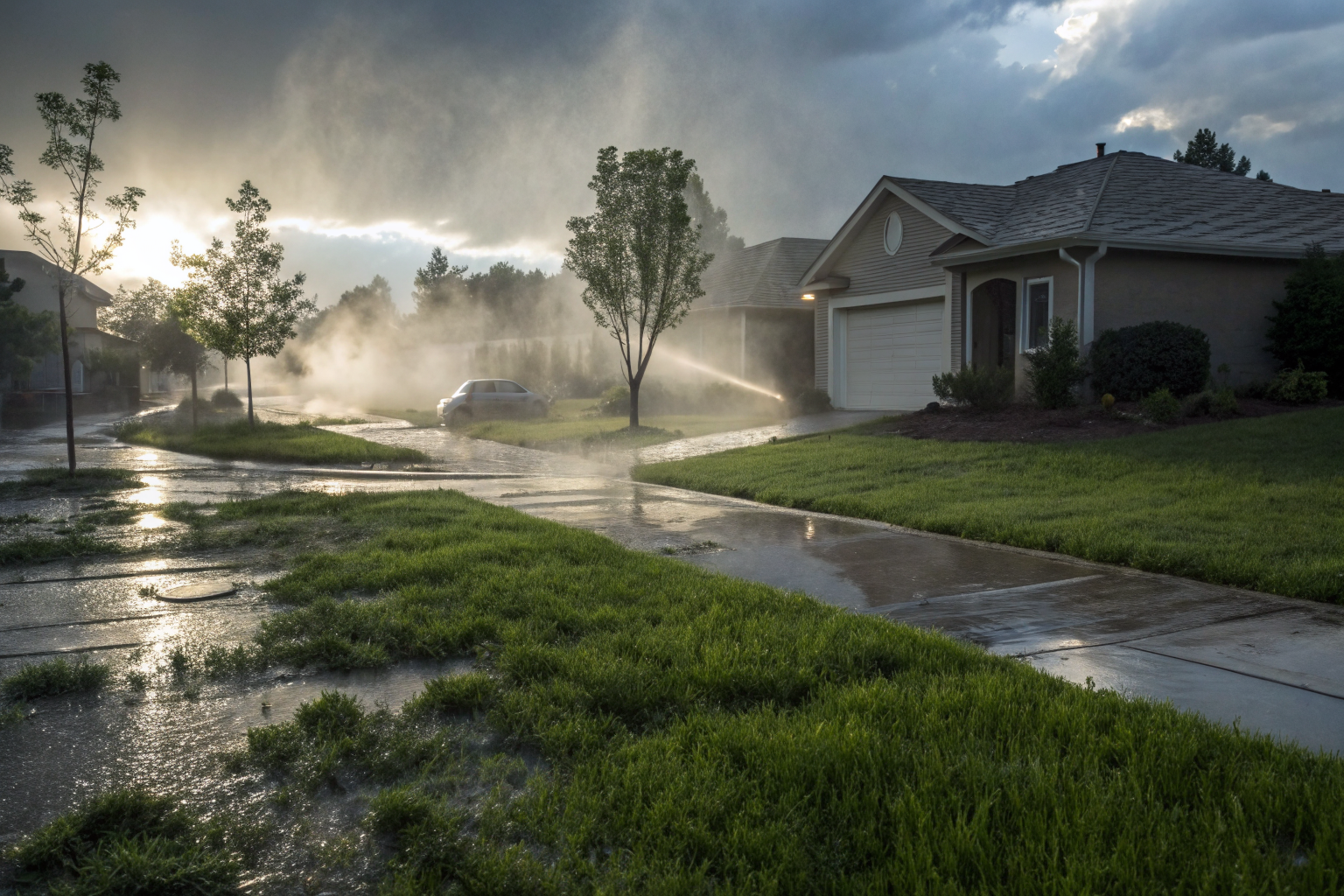
Wet spots indicate drainfield effluent surfacing instead of filtering through soil. Your drainfield has reached saturation point and cannot process wastewater at the rate your household produces it.
Your yard provides a visual diagnostic system for drainfield failure:
• Persistent wet areas — spots that stay soggy 48+ hours after rain indicate effluent pooling at or near the surface
• Unusually green grass patches — nitrogen-rich sewage acts as fertilizer, creating darker green strips over distribution lines
• Grass growth differences — areas above your drainfield grow 20-30% faster than surrounding lawn during growing season
• Bare spots in winter — effluent prevents grass from going dormant, killing it during freeze-thaw cycles
• Snow melt patterns — warm effluent melts snow faster over drainfield lines, creating visible system layout
• Spongy soil texture — ground that feels soft or bouncy underfoot indicates saturated soil conditions
• Standing water after dry weather — any surface water over your drainfield during drought conditions means complete failure
Wet spots appearing 48+ hours after rain indicate drainfield saturation and imminent failure. Normal soil absorption should eliminate surface water within 24 hours of precipitation.
The progression follows seasonal patterns. Spring thaw creates the first wet spots as frozen soil prevents normal drainage. Summer brings the grass growth differences. Fall shows bare patches where grass dies from effluent contact. Winter reveals the system layout through snow melt.
Most homeowners mistake these signs for landscaping problems. They overseed bare spots or install drainage for wet areas, which only masks the underlying septic failure. The grass growth differences are the most reliable early indicator because they appear before wet spots develop.
Stage 3: Sewage Backup — The Point of No Return

Sewage backup requires immediate emergency response to prevent permanent damage to your home and septic system. At this stage, wastewater has nowhere to go except back through your plumbing.
| Backup Type | Warning Signs | Cause | Emergency Cost | Delay Cost |
|---|---|---|---|---|
| Minor backup | Toilet water rises when flushed | Tank overfull | $800-1,200 pumping | $3,000-5,000 repairs |
| Major backup | Sewage in basement floor drains | Complete drainfield failure | $1,200-2,000 pumping + cleanup | $15,000-35,000 replacement |
| House-wide backup | Multiple fixtures backing up | Total system collapse | $2,000-4,000 emergency service | $25,000-50,000 new system |
Sewage backup in house indicates complete system failure — emergency pumping costs $800-1,200 vs standard $300-500. The price difference reflects after-hours service, hazmat cleanup, and emergency equipment mobilization.
Minor backup starts with toilets that won’t flush completely. Water rises in the bowl, drains slowly, then returns to normal level. This pattern repeats with each flush until the toilet stops working entirely.
Major backup brings raw sewage into your basement through floor drains, laundry sinks, or shower drains. Once sewage enters your house, you’re dealing with contaminated surfaces, damaged flooring, and potential health hazards.
The timing between minor and major backup is typically 24-72 hours. Most homeowners wait for minor backup to resolve itself, which guarantees major backup within three days.
House-wide backup means every drain in your home stops working simultaneously. This only happens when both your septic tank and drainfield fail completely. Recovery requires full system replacement plus extensive house cleanup.
Emergency response timing determines total cost. Calling within 2 hours of first backup limits damage to plumbing fixtures. Waiting 24+ hours adds flooring, drywall, and content cleaning to your bill.
How Fast Do These Warning Signs Actually Progress?

Septic system failure signs progress along a predictable timeline from first symptoms to complete breakdown. Understanding this timeline helps you catch problems when repairs still work instead of waiting for replacement costs.
The progression varies by household size, system age, and maintenance history, but the pattern stays consistent:
| Stage | Timeline | Warning Signs | Repair Window | Typical Cost |
|---|---|---|---|---|
| Early | Months 1-2 | Single drain slows | 60-90 days | $300-800 pumping |
| Moderate | Months 3-4 | Multiple drains, odors | 30-45 days | $1,500-3,000 repairs |
| Advanced | Months 5-6 | Wet spots, gurgling | 2-4 weeks | $5,000-8,000 drainfield work |
| Critical | Month 6+ | Sewage backup | 24-48 hours | $15,000-35,000 replacement |
Complete system failure occurs 6-18 months after first slow drain symptoms appear. Seasonal factors accelerate this timeline by 30-50% during spring thaw and heavy rain periods.
Winter problems progress faster because frozen soil prevents normal drainage. A system showing early signs in November will likely fail completely by March. Summer heat speeds bacterial die-off, turning moderate problems into advanced failures within 4-6 weeks.
The septic system inspection window closes rapidly once symptoms begin. Early-stage problems give you 60+ days to schedule routine service. Advanced symptoms require emergency calls within 2-3 weeks.
Most system failures occur during transition seasons when soil conditions change rapidly. Spring brings frozen ground thaw and increased water flow. Fall brings temperature drops that slow bacterial action. These seasonal stresses push marginal systems into failure mode.
The key insight: every homeowner gets the same warning sequence, but the timeline compresses with each ignored symptom. Addressing slow drains gives you months to plan repairs. Waiting for sewage backup gives you hours to prevent catastrophic damage.