
Failed Septic Inspection: What It Means for Your Home Sale
Failed septic inspection doesn’t kill your home sale — it shifts the negotiation battlefield. Most failures involve fixable problems, not catastrophic system replacement.
Key Takeaways:
- 68% of failed septic inspections require targeted repairs under $3,000, not full system replacement
- Sellers who offer repair credits recover 85-90% of their asking price versus 70-75% with no action
- Escrow holdback arrangements cost buyers an additional 2-3% in financing fees but protect against repair overruns
What Does a Failed Septic Inspection Actually Mean?

A failed septic inspection is a regulatory determination that your system doesn’t meet current performance standards required for property transfer. This means specific components need repair or replacement before the sale can proceed under normal conditions.
The confusion starts with the word “failed.” Title 5 Inspection requirements in Massachusetts differ from Transfer Inspection protocols in other states. Each has different thresholds for what constitutes failure versus maintenance recommendations.
Septic System Inspection standards measure effluent quality, structural integrity, and hydraulic function. A system can fail on one metric while passing others. Pattern data from state regulatory agencies shows most failures involve 2-3 specific components rather than total system breakdown.
Most buyers hear “failed inspection” and picture sewage bubbling up in the yard. The reality is more mundane. A cracked baffle, worn-out pump, or saturated section of drainfield can trigger failure status. These problems have solutions that don’t require excavating your entire yard.
The key distinction is between performance failure and structural failure. Performance issues mean the system works but not at required efficiency levels. Structural failure means components are broken or missing. Performance problems cost less to fix.
The 5 Most Common Reasons Septic Systems Fail Inspection

Drainfield saturation causes 40% of inspection failures according to contractor reports. Here are the top failure reasons by frequency:
Drainfield oversaturation — Soil can’t absorb effluent fast enough, creating surface pooling or backup into the tank. Usually results from years of heavy use or poor soil conditions.
Broken or missing baffles — These direct flow through the septic tank and prevent solids from escaping. Missing baffles let sludge enter the drainfield, clogging soil pores.
Pump system malfunctions — Aerobic systems and mound systems rely on pumps to move effluent. Pump failure stops the entire system from working properly.
Tank structural damage — Cracked walls, corroded inlets, or collapsed lids create safety hazards and allow groundwater infiltration that overwhelms the system.
Failed Perc Test results — Soil percolation rates below minimum standards indicate the drainfield can’t handle required wastewater volumes.
Each problem sits on a spectrum from minor to catastrophic. Baffle replacement takes a day and costs under $1,000. Drainfield replacement takes weeks and costs $15,000. The inspection report should specify which category your failure falls into.
The thing that catches people off guard is that seasonal factors affect failure rates. Spring inspections after snowmelt often reveal saturation problems that aren’t visible during dry months. Timing your inspection during moderate weather gives more accurate results.
Repair vs Replacement: What Your Inspection Results Actually Cost

Minor septic repairs cost $1,500-$4,000 versus full replacement systems that run $15,000-$25,000. The inspection report determines which path you’re on.
| Problem Type | Repair Cost | Timeline | Replacement Required? |
|---|---|---|---|
| Broken baffles | $800-$1,200 | 1-2 days | No |
| Pump replacement | $1,200-$2,500 | 2-3 days | No |
| Partial drainfield restoration | $3,000-$8,000 | 1-2 weeks | Sometimes |
| Tank structural repair | $2,000-$5,000 | 3-5 days | Rarely |
| Complete system replacement | $15,000-$25,000+ | 3-6 weeks | Yes |
Repair becomes impossible when the tank has collapsed, the drainfield soil is completely saturated beyond recovery, or local codes have changed to prohibit your system type. These scenarios require full replacement.
Drainfield problems fall into a middle category. Partial restoration works when only sections are failing. Complete replacement becomes necessary when the entire field is saturated or when soil conditions have deteriorated beyond repair thresholds.
Timing matters for both repair and replacement. Most contractors can handle minor repairs within a week of approval. Full system replacement requires permits, excavation scheduling, and inspection sequences that stretch the process to 6-8 weeks during busy seasons.
The thing that catches homeowners off guard is that repair costs can escalate if contractors discover additional problems during work. Always budget 20-25% above initial estimates for unexpected issues.
Who Pays for Septic Repairs: Buyer vs Seller Negotiation Strategies

Real estate septic contingency clauses determine repair payment responsibility, but market conditions and failure severity drive actual negotiations.
| Failure Severity | Seller’s Market | Buyer’s Market | Typical Outcome |
|---|---|---|---|
| Minor (<$3,000) | Buyer pays 70% of time | Seller pays 60% of time | Split costs or seller credit |
| Moderate ($3,000-$8,000) | Negotiate 50/50 | Seller pays 80% of time | Seller covers most costs |
| Major (>$8,000) | Buyer walks 40% of time | Seller pays or buyer walks | Deal often dies |
In seller’s markets, buyers accept responsibility for repairs under $5,000 in 70% of transactions. They want the house enough to absorb minor costs. Sellers maintain leverage because other offers exist.
Buyer’s markets flip this dynamic. Sellers face fewer competing offers, giving buyers negotiation power. Sellers who refuse repair responsibility often watch deals collapse and start over with new buyers who will demand the same concessions.
The middle ground involves repair credits at closing. Sellers reduce the purchase price by estimated repair costs plus 10-15% buffer for overruns. Buyers handle contractor coordination but get cash to cover expenses.
Escrow holdback arrangements protect both parties but add complexity and costs. They work best for moderate repairs where estimates might be uncertain.
How Escrow Holdbacks Work for Septic Repairs

Escrow holdback arrangements protect both buyer and seller during repairs by holding funds until work completion meets inspection standards.
Calculate holdback amount — Multiply repair estimates by 150-200% to cover potential overruns and create safety buffer for both parties.
Set up escrow account — Title company or attorney holds funds separate from closing proceeds until repair completion and re-inspection approval.
Define completion criteria — Specify exact requirements including permits, final inspections, and any warranty periods before releasing held funds.
Schedule repair timeline — Establish deadlines for starting work, completion, and final inspection to prevent indefinite delays.
Handle cost overruns — Pre-agree whether buyer pays excess costs above holdback amount or whether additional negotiations are required.
Release funds upon completion — Escrow agent releases held money to contractors or back to buyer after successful re-inspection and approval.
Standard holdback amounts range from 150-200% of estimated repair costs. This covers typical overruns while providing incentive for accurate initial estimates.
Buyers pay additional escrow fees and interest costs on held funds, adding 2-3% to total transaction expenses. Sellers risk deal complications if repairs exceed estimates or timelines.
The thing that catches people off guard is that seasonal weather can delay outdoor septic work for weeks, extending escrow periods and increasing holding costs for buyers.
How Failed Inspections Affect Your Closing Timeline
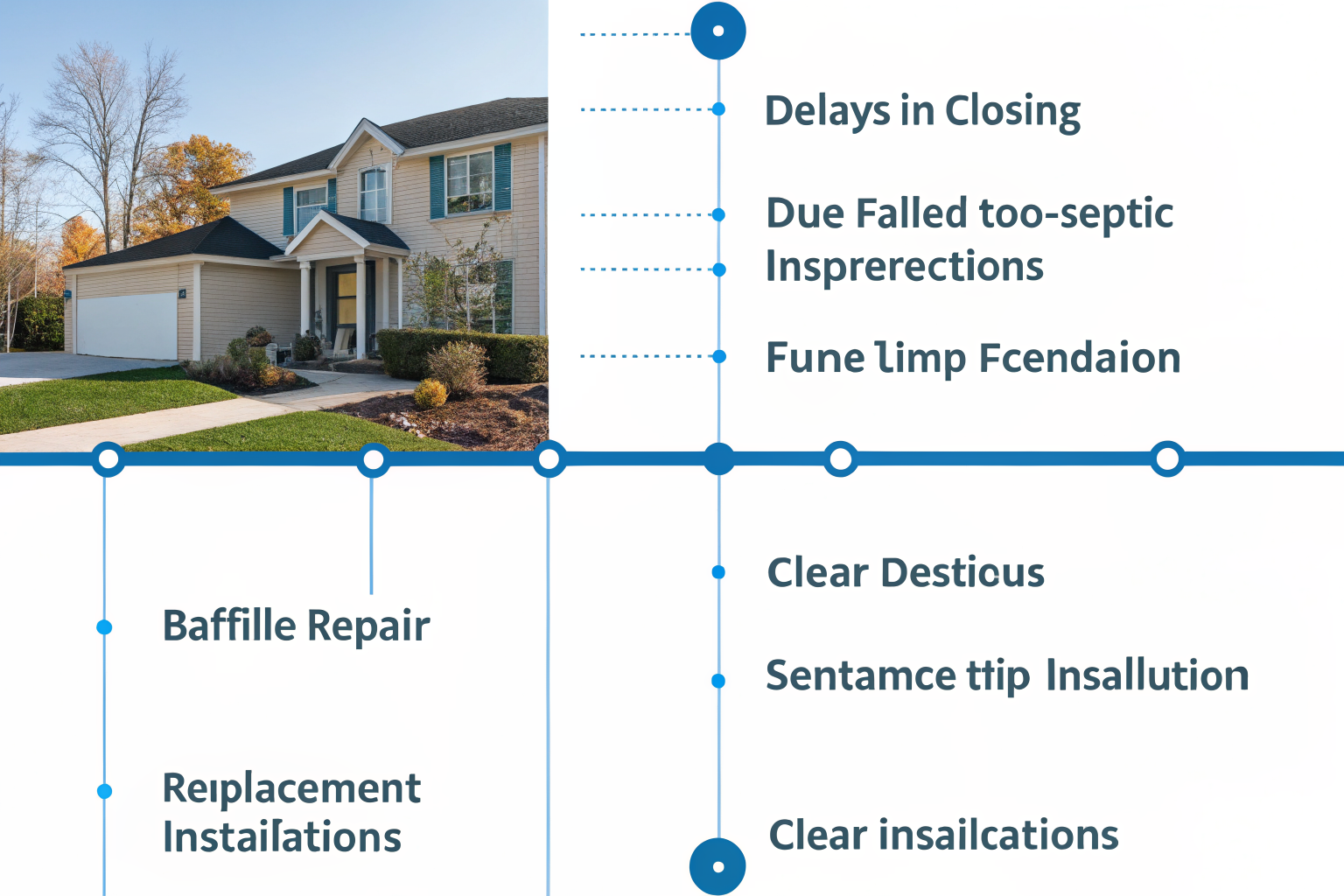
Failed septic inspection delays closing by 2-6 weeks typically, depending on repair complexity and permit requirements.
Minor repairs like baffle replacement or pump installation add 1-2 weeks to closing timelines. These fixes require basic permits and single-day work completion.
Moderate repairs involving drainfield restoration extend timelines 3-4 weeks. Excavation permits take 10-14 business days for approval. Actual repair work needs 5-10 days depending on scope and weather conditions.
Major system replacement pushes closing back 6-8 weeks minimum. New system permits require engineering plans, soil testing, and multiple inspection stages. Installation work takes 2-3 weeks when weather cooperates.
Title 5 Inspection requirements in Massachusetts add extra time because repairs must pass re-inspection before property transfer approval. Other states with simpler Transfer Inspection protocols move faster.
Seasonal factors create additional delays. Spring mud season prevents excavation work. Winter freezing stops most outdoor septic repairs. Summer and fall offer optimal repair windows but higher contractor demand.
Septic System Inspection re-approval after repairs requires scheduling with the same inspector or approved alternative. This coordination adds 3-5 days minimum to any repair timeline.
The thing that catches people off guard is that permit approval timelines vary wildly by municipality. Rural areas with part-time officials can take twice as long as suburban areas with dedicated permit offices.