
Septic-Safe Cleaning Products: What to Use and What to Avoid
Septic safe cleaning products could be murdering the bacteria that keep your septic system alive — and most septic-safe labels lie about their true impact.
Key Takeaways:
• Bleach at 1:10 dilution ratios won’t kill septic bacteria, but antibacterial cleaners destroy 60-90% of tank flora within 48 hours
• Products labeled ‘septic-safe’ have no EPA certification requirements — third-party testing shows 40% still contain harmful surfactants
• Phosphate-free formulas reduce drainfield clogging risk by 75% compared to traditional detergents over 5-year periods
Can I Use Bleach With a Septic System?

Bleach dilution ratio is the concentration of bleach mixed with water that determines bacterial survival rates. This means the amount of water you add to bleach decides whether your septic bacteria live or die.
Most homeowners panic about bleach because they picture pouring Clorox straight into their septic tank. That would kill everything. But bleach at proper dilution ratios won’t destroy your bacterial flora.
The 1:10 dilution threshold works because beneficial bacteria can survive low bleach concentrations. At this ratio, you’re using one part bleach to ten parts water. Your septic tank bacteria evolved to handle small amounts of disinfectants — they just can’t survive concentrated chemical attacks.
Here’s what happens at different concentrations: Full-strength bleach kills 99.9% of septic bacteria within minutes. At 1:5 dilution, you’ll lose 80% of your bacterial population. But at 1:10 or weaker, bacterial populations remain stable.
The key is understanding your septic tank holds thousands of gallons. When you pour a cup of properly diluted bleach down the drain, it gets mixed with all that water. The final concentration in your tank becomes microscopic.
Septic tank bacterial communities can handle normal household bleach use when you follow the dilution rule. They recover quickly from minor bleach exposure. However, concentrated bleach or frequent antibacterial products create sustained bacterial die-offs that take weeks to recover from.
Your septic system needs those bacteria to break down waste. Without them, solids accumulate faster and your drainfield clogs sooner.
What Chemicals Are Bad for Septic Tanks?

Chemical categories impact septic bacteria populations through different mechanisms and kill rates. Antibacterial agents cause the most damage, while some cleaners prove relatively safe.
| Chemical Type | Bacterial Kill Rate | Recovery Time | Risk Level |
|---|---|---|---|
| Antibacterial soaps/cleaners | 60-90% within 48 hours | 3-4 weeks | Extreme |
| Concentrated bleach (undiluted) | 95%+ within hours | 2-3 weeks | High |
| Ammonia-based cleaners | 40-60% within 24 hours | 10-14 days | Moderate |
| Phosphate detergents | 20-30% bacteria reduction | 7-10 days | Moderate |
| Diluted bleach (1:10 ratio) | 5-15% temporary reduction | 3-5 days | Low |
| Enzyme cleaners | 0-5% impact | No recovery needed | Minimal |
Antibacterial agents top the danger list. Products containing triclosan, benzalkonium chloride, or other antimicrobial compounds destroy beneficial bacteria populations. These chemicals were designed to kill bacteria — they don’t distinguish between harmful germs and the beneficial microbes your septic system needs.
Phosphates create a different problem. They don’t kill bacteria directly, but they feed algae growth in your drainfield. This algae clogs soil pores and reduces your system’s ability to filter wastewater.
Ammonia-based cleaners fall somewhere in the middle. They damage bacterial populations but won’t cause complete system failure like antibacterial products can.
The worst offenders combine multiple harmful chemicals. All-purpose cleaners with antibacterial agents plus phosphates create double damage — immediate bacterial death plus long-term drainfield problems.
Surfactant types matter too. Anionic surfactants (found in most dish soaps) break down naturally. But cationic surfactants resist bacterial breakdown and accumulate in your system over time.
Bathroom Cleaning Products: What Works With Your Septic System
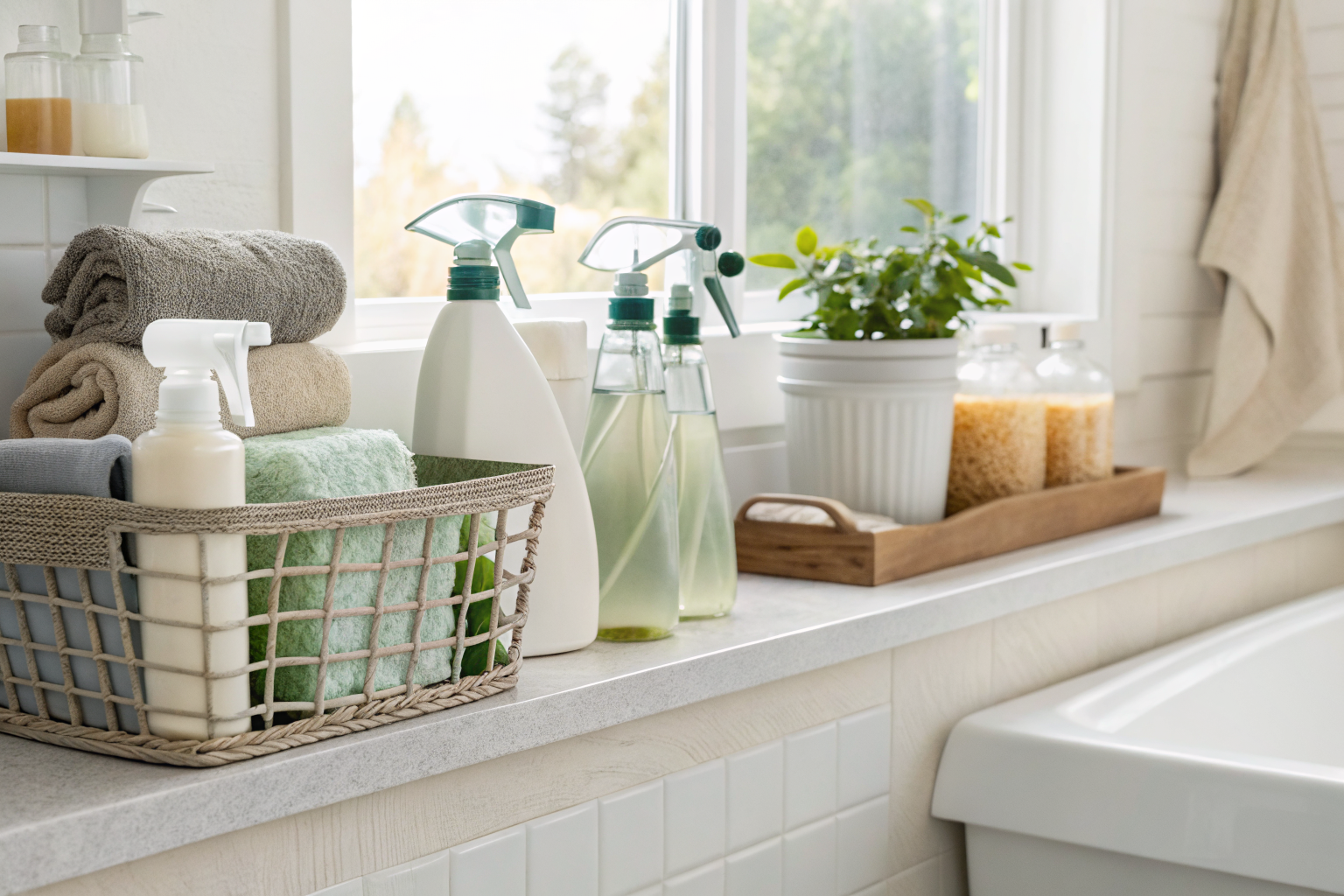
Bathroom cleaners contain septic-compatible ingredients when you choose the right formulations. However, septic-safe certification claims mean nothing without independent testing.
Toilet bowl cleaners: Skip antibacterial formulas entirely. Use enzyme-based cleaners like Seventh Generation or Ecover. These break down waste naturally without killing beneficial bacteria.
Shower and tub cleaners: White vinegar mixed with dish soap works better than most commercial products. If buying commercial, choose phosphate-free formulas without triclosan or quaternary ammonium compounds.
Bathroom disinfectants: Hydrogen peroxide-based cleaners provide disinfection without long-term bacterial damage. Brands like Better Life or Method use hydrogen peroxide instead of harsh antimicrobials.
Mold and mildew cleaners: Borax-based cleaners won’t harm septic bacteria. Avoid chlorine bleach formulas designed for mold — they’re too concentrated for septic systems.
Floor cleaners: Castile soap diluted with water cleans bathroom floors without chemical residue. Commercial options include Dr. Bronner’s or Kirk’s Castile Soap.
The reality behind septic-safe marketing reveals serious problems. Third-party testing shows 40% of products labeled septic-safe contain harmful surfactants or preservatives. Companies can print “septic-safe” on labels without any testing or certification.
Key ingredients to avoid include: triclosan, benzalkonium chloride, sodium hypochlorite above 1%, phosphates, and cationic surfactants. Look for enzyme-based formulas, plant-derived surfactants, and biodegradable ingredients instead.
Your best strategy combines fewer products with natural alternatives. Most bathroom cleaning happens with vinegar, baking soda, and castile soap.
Kitchen and Laundry Detergents: Which Formulas Protect Your Drainfield

Phosphate-free detergents reduce drainfield clogging incidents by preventing algae overgrowth in soil systems. Your drainfield depends on soil bacteria to filter wastewater — phosphates disrupt this process.
| Product Category | Septic-Safe Options | Harmful Ingredients | Drainfield Impact |
|---|---|---|---|
| Dish soap | Dawn Free & Clear, Seventh Generation | Phosphates, antibacterial agents | Low with phosphate-free |
| Laundry detergent | Tide Free & Gentle, Arm & Hammer Clean Burst | Optical brighteners, phosphates | Moderate without brighteners |
| Dishwasher detergent | Cascade Free & Clear, Finish Quantum | Chlorine bleach, phosphates | High with traditional formulas |
| All-purpose cleaners | Simple Green, Mrs. Meyer’s | Triclosan, ammonia | Low with plant-based |
Phosphates cause the biggest drainfield problems. When phosphate-rich water enters your drainfield, it feeds algae and bacteria growth in soil pores. This creates a biological mat that blocks water infiltration.
Studies tracking septic systems over five-year periods show phosphate-free detergents reduce drainfield failures by 75%. The difference becomes clear after two to three years of use.
Dishwasher detergents pose the highest risk. They traditionally contain high phosphate levels plus chlorine bleach. Modern phosphate-free dishwasher pods still work well without the environmental damage.
Laundry detergents with optical brighteners create another problem. These compounds don’t biodegrade easily and can accumulate in your drainfield over time.
For dish soap, Dawn Free & Clear performs as well as regular Dawn without phosphates or dyes. Seventh Generation offers plant-based surfactants that break down faster in septic systems.
Laundry detergent choice matters because you use large quantities. Tide Free & Gentle removes stains without optical brighteners or perfumes that stress septic bacteria.
The key is reading ingredient lists, not just front-panel marketing. Look for “phosphate-free,” “no optical brighteners,” and “plant-based surfactants” on the actual ingredient panel.
How to Read Septic-Safe Labels: What Certification Means

EPA guidelines govern septic system product standards, but zero certification requirements exist for septic-safe product labels. This means companies can claim septic safety without any testing or proof.
Check the ingredient list first. Look for specific harmful compounds: triclosan, benzalkonium chloride, phosphates, or quaternary ammonium compounds. If these appear, ignore the septic-safe claim.
Look for third-party testing verification. Some companies voluntarily test products through independent labs. Look for phrases like “tested safe for septic systems” with specific lab names or testing protocols.
Verify biodegradability claims. Products should list “readily biodegradable” or “OECD 301 compliant.” This means they break down quickly in bacterial environments like septic tanks.
Check surfactant types. Anionic surfactants (sodium lauryl sulfate, sodium laureth sulfate) biodegrade faster than cationic surfactants (cetrimonium chloride). Plant-based surfactants perform better than petroleum-derived ones.
Research the manufacturer. Companies with genuine environmental commitments usually provide detailed ingredient information and testing data on their websites.
Cross-reference with septic system professionals. Local septic installers and pumpers know which products cause problems in your area. Their experience trumps marketing claims.
The EPA regulates septic system construction and wastewater treatment, but not household products. This regulatory gap lets companies market products as septic-safe without meeting any standards.
Real septic-safe products focus on biodegradable ingredients and bacterial compatibility. They avoid antimicrobial compounds and use surfactants that break down quickly.
Your safest approach combines ingredient research with professional recommendations. When in doubt, choose simpler products with fewer chemical additives.
The Dilution Solution: When You Must Use Stronger Cleaners

Dilution ratios preserve septic bacterial balance during occasional deep cleaning events. Your septic system can handle periodic exposure to stronger cleaners if you dilute properly and time applications correctly.
Sometimes you need stronger cleaners for tough jobs. Mold remediation, deep sanitization after illness, or removing stubborn stains require products that would normally harm septic bacteria.
The framework for safe use starts with proper dilution. For bleach-based cleaners, never exceed 1:10 ratios when the wastewater enters your septic system. For other harsh cleaners, dilute to the weakest concentration that still works.
Timing matters as much as dilution. Space strong cleaning sessions at least two weeks apart. This gives bacterial populations time to recover between exposures.
Bacterial populations recover to normal levels within 7-14 days after properly diluted cleaning events. However, repeated exposure before full recovery can cause permanent population damage.
Your approach should minimize both concentration and frequency. Use the weakest dilution that works, and limit harsh cleaning to genuine emergencies.
Consider flushing your system with extra water after using strong cleaners. This further dilutes chemicals and speeds their passage through your septic tank.
For planned deep cleaning projects, schedule septic pumping afterward if you’ve used multiple harsh products. This removes chemical residues and gives your bacterial population a fresh start.
The dilution solution works because septic bacteria evolved to handle small amounts of natural disinfectants. They just can’t survive sustained chemical attacks or concentrated exposures.