

Colorado Septic System Regulations: OWTS Permits and Mountain Property Rules
Colorado septic system regulations force mountain properties to navigate a maze of county-specific rules where bedrock, altitude, and brutal winters make standard systems fail. Thin soil and -20°F temperatures demand specialized designs that cost thousands more.
Key Takeaways:
- Colorado Regulation 43 delegates septic oversight to 64 counties, creating wildly different permit costs from $75 in rural areas to $2,400 in Summit County
- Mountain properties above 8,000 feet require specialized cold-climate designs that cost 40-60% more than standard systems
- Vault systems replace drainfields in 23% of Colorado mountain installations where soil depth measures less than 18 inches over bedrock
What Is Colorado Regulation 43 and Which County Controls Your Septic System?

Colorado Regulation 43 OWTS standards is the state framework that delegates septic system authority to individual counties. This means each of Colorado’s 64 counties runs its own septic program with unique rules, fees, and requirements.
Regulation 43 was enacted in 1998 to establish minimum statewide standards while allowing counties to impose stricter rules based on local conditions. The State Health Department sets baseline requirements, but your county health department makes the final decisions on permits, inspections, and system approvals.
Mountain counties face unique challenges. Summit, Eagle, and Pitkin counties enforce some of the nation’s strictest septic rules because high-altitude conditions destroy conventional systems. These counties require professional maintenance contracts, annual inspections, and specialized cold-climate designs that most Colorado counties don’t mandate.
Your property falls under whichever county issued your address. City limits don’t matter for septic regulation. A Denver suburb might fall under Jefferson County rules, while a mountain cabin near Vail operates under Eagle County’s program.
County-level OWTS management programs vary dramatically in scope and cost. Rural counties often use simplified permit processes with basic soil testing requirements. Mountain resort counties demand engineered designs, professional oversight, and annual compliance reports.
Colorado OWTS Permit Requirements: What You Need and What It Costs

Colorado OWTS permits vary by county jurisdiction, creating a complex web of requirements across the state. You need permits for new construction, major repairs, and system alterations — but definitions of “major” change by county.
Construction permits cover new septic installations and complete system replacements. Repair permits apply to drainfield replacement, tank repairs, and pump modifications. Alteration permits handle capacity increases, like adding bedrooms or bathrooms that increase wastewater flow.
| County Type | Construction Permit | Repair Permit | Processing Time |
|---|---|---|---|
| Rural Counties | $75-$300 | $50-$150 | 2-4 weeks |
| Front Range | $400-$800 | $200-$400 | 4-6 weeks |
| Mountain Resort | $1,200-$2,400 | $600-$1,200 | 6-12 weeks |
| Metro Areas | $600-$1,000 | $300-$500 | 3-8 weeks |
Permit costs range from $75 to $2,400 depending on county and system complexity. Summit County charges the highest fees because they require professional engineering reviews for all mountain installations above 8,000 feet elevation.
Application requirements include soil percolation tests, site surveys, and engineered system designs. Mountain counties demand additional winter operation plans and annual maintenance agreements. Processing times stretch longer during construction season when permit offices face application backlogs.
Septic System Permits require renewal for major modifications. Adding a bedroom means increasing system capacity, which triggers new permit requirements in most counties. Some counties grandfather older systems but require upgrades when permits expire.
How Do High-Altitude Soil Conditions Affect Your Septic System Design?

High altitude conditions require specialized system design because mountain soils behave differently than lowland installations. Thin soil layers over bedrock prevent normal drainfield function, while extreme frost penetration freezes pipes and tanks.
Perc Test results at altitude often show rapid drainage through rocky soil, followed by complete blockage at bedrock contact. Standard perc test procedures fail to capture these conditions, so mountain counties require modified testing protocols that measure soil depth and bedrock permeability separately.
Mountain properties above 8,000 feet face frost penetration depths of 4-6 feet versus 2-3 feet at lower elevations. This forces all system components below the frost line, increasing excavation costs and requiring specialized insulation materials.
Bedrock barriers create the biggest design challenge. Solid granite or limestone layers prevent normal soil absorption, forcing engineers to design shallow systems that spread wastewater over larger surface areas. These systems cost more to build and maintain because pumps must distribute effluent to multiple absorption areas.
Cold Climate System Design requirements kick in when winter temperatures drop below -10°F for extended periods. Standard concrete tanks crack in freeze-thaw cycles, while plastic tanks require insulation wrapping and heated components to prevent freeze damage.
Soil conditions above treeline present additional challenges. Lack of vegetation means no natural soil building, while wind erosion removes what little topsoil exists. These sites often require imported soil and specialized vegetation to establish functional absorption areas.
When Does Colorado Require Vault Systems Instead of Traditional Drainfields?
Vault systems replace drainfields when soil conditions fail to meet absorption requirements. These sealed holding tanks collect all wastewater for periodic pumping, eliminating soil treatment entirely.
Colorado counties mandate vault systems under specific conditions:
Insufficient soil depth — Vault systems are required when soil depth measures less than 18 inches over impermeable bedrock, preventing normal drainfield installation.
Failed percolation rates — Soils that drain too quickly (faster than 1 inch per minute) or too slowly (slower than 1 inch per hour) cannot treat wastewater effectively.
Groundwater protection zones — Properties within 100 feet of wells, springs, or surface water bodies often require vault systems to prevent contamination.
Seasonal high water tables — Areas where groundwater rises within 24 inches of the surface during snowmelt require sealed systems.
Slope restrictions — Properties on slopes steeper than 30% cannot support conventional drainfields due to runoff and erosion concerns.
Setback violations — Lots too small to meet required distances from property lines, wells, or buildings default to vault systems.
Septic System Design Approval for vault installations requires professional pumping contracts and emergency backup plans. Vault systems need pumping every 4-8 weeks depending on household size, costing $300-$500 per service call.
Mountain properties use vault systems more frequently than Front Range locations because rocky soils and extreme weather make conventional systems impractical. Installation costs run 20-30% higher than drainfield systems, but maintenance costs dominate long-term expenses.
Colorado County Septic Programs: Which Counties Have the Strictest Rules?
Mountain counties enforce stricter OWTS management programs because altitude, climate, and geology create unique septic challenges. Resort communities also face higher wastewater volumes from vacation rentals and seasonal population swings.
| County | Annual Inspections | Professional Maintenance | Permit Fees | Special Requirements |
|---|---|---|---|---|
| Summit | Required | Mandatory contracts | $1,800-$2,400 | Winter operation plans |
| Eagle | Required | Alternative systems only | $1,200-$1,800 | Groundwater monitoring |
| Pitkin | Required | Mandatory contracts | $1,500-$2,000 | Soil import regulations |
| Jefferson | Optional | Not required | $400-$600 | Standard state minimums |
| El Paso | Optional | Not required | $300-$500 | Standard state minimums |
Summit County requires professional operation and maintenance contracts for all alternative systems, unlike most Colorado counties that allow homeowner maintenance. This requirement adds $800-$1,200 annually to system operating costs but reduces failure rates by 40%.
Mountain resort counties impose additional rules beyond State Health Department minimums. Eagle County requires groundwater monitoring wells for systems within 500 feet of the Eagle River. Pitkin County regulates soil importation to prevent contaminated materials from entering absorption areas.
County-level OWTS management programs reflect local priorities. Rural agricultural counties focus on basic public health protection with minimal oversight. Mountain counties prioritize environmental protection and system reliability through intensive regulation and professional oversight.
Front Range counties balance development pressure with resource protection. Jefferson and Douglas counties require soil testing and engineered designs but avoid the intensive maintenance requirements common in mountain areas.
What Cold-Climate Design Features Do Colorado Mountain Systems Actually Need?
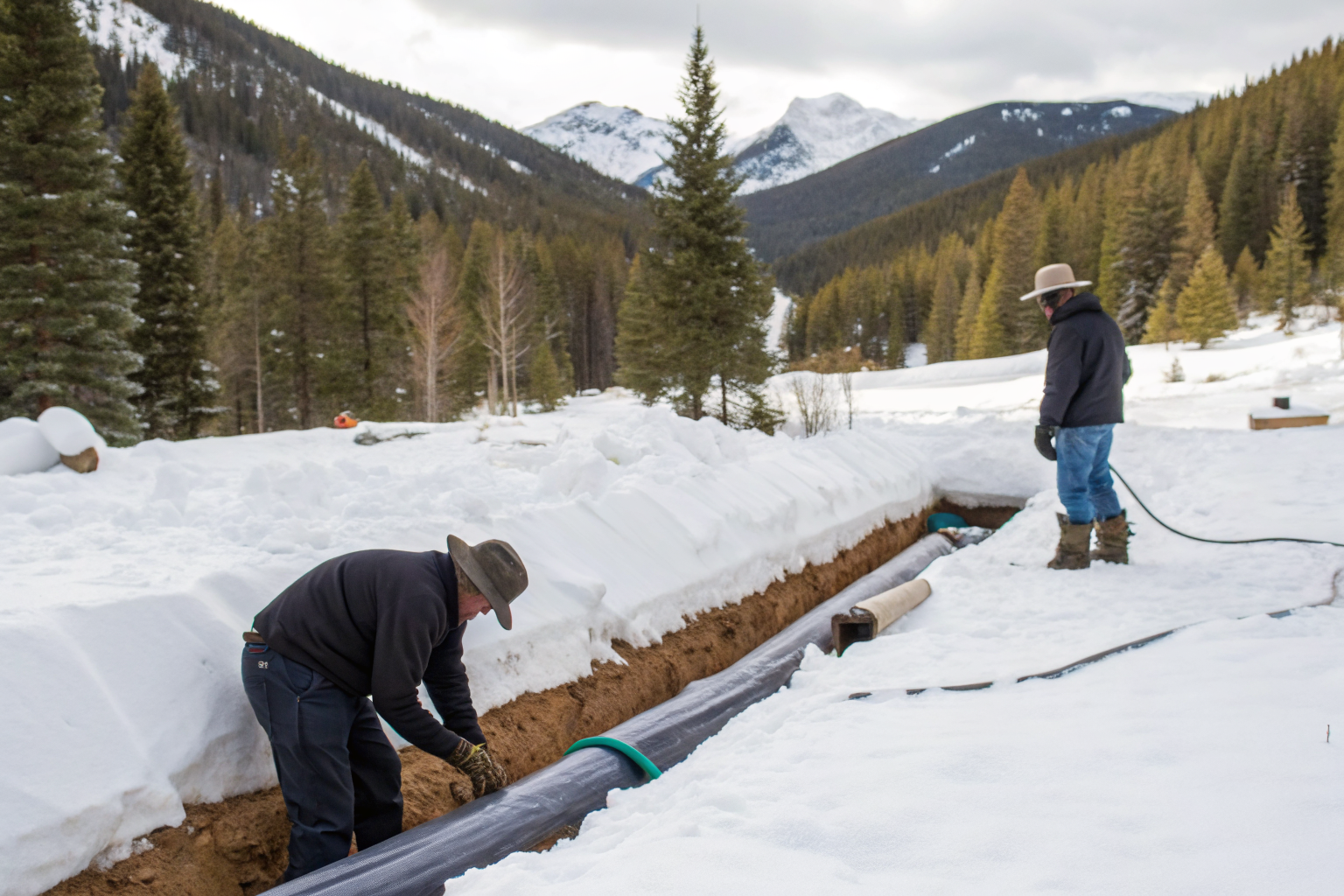
Cold climate systems require specific design modifications to function through Colorado’s harsh mountain winters. Standard septic components fail when temperatures drop below -10°F for extended periods.
Cold Climate System Design follows these essential steps:
Install insulation barriers — Wrap all pipes, tanks, and distribution boxes with rigid foam insulation rated to R-20 or higher to prevent freeze damage.
Deepen all components — Place tank tops, distribution boxes, and pump chambers at least 6 feet below grade in zones with design temperatures below -10°F.
Add dosing system controls — Install timed dosing pumps that deliver small, frequent doses to prevent effluent from freezing in distribution lines.
Specify freeze-resistant materials — Use concrete tanks with air-entraining agents or double-wall plastic tanks with insulation cores instead of standard single-wall units.
Design backup heating systems — Install tank heaters and heated pump chambers with temperature sensors that activate when internal temperatures approach freezing.
Plan winter access routes — Create snow-accessible service routes to tanks, pumps, and control panels for emergency repairs and routine maintenance.
High altitude system design considerations include wind protection and solar heat gain. Exposed tank risers and control panels need wind barriers to prevent heat loss. South-facing slopes capture solar energy that helps prevent freeze damage in borderline climate zones.
Professional maintenance becomes essential at altitude because homeowners cannot diagnose frozen pumps or blocked distribution lines. Mountain counties require annual inspections specifically because cold-climate systems fail without proper winterization and professional oversight.
Insulation requirements vary by elevation and exposure. Protected valley locations might need basic pipe insulation, while exposed ridge properties require heated components and backup power systems to maintain winter operation.