

How to Find Your Septic Tank: Location Methods That Actually Work
Most homeowners can’t locate their septic tank until something goes wrong and they’re facing a $5,000 emergency excavation. Learning how to find septic tank location before you need it saves you from panic-driven decisions and contractor markup.
Key Takeaways:
- County records locate 73% of septic tanks built after 1970 for free within 24 hours
- Probe rod technique finds tanks in 15-30 minutes with 85% accuracy when done correctly
- Professional electronic locating costs $150-300 but guarantees exact location within 6 inches
Where Are County Records and As-Built Drawings Actually Located?

County records contain septic tank locations for most homes built after EPA Septic System Guidelines took effect. Your local health department or environmental services office keeps these permits on file. Here’s the exact process:
Call your county health department first. Ask specifically for “septic system permits” or “on-site wastewater permits.” Don’t say “building permits” – different department.
Provide your property address and parcel number. The clerk will search their database for installation permits, which include tank location measurements from your house foundation.
Request a copy of the as-built drawing if available. This shows exact measurements from fixed reference points like your home’s corners to the Septic Tank location.
Check the building department if health department has no records. Some older permits got filed with general construction permits.
Contact your city hall for homes in municipal areas. City permits sometimes exist even when county records don’t.
Houses built before 1970 have only 23% permit record availability. If your home predates comprehensive septic regulations, you’ll need physical location methods. The clerk will tell you immediately if records exist – don’t waste time with multiple visits.
One thing I should mention: some counties moved to digital systems and lost older paper records during the transition. Ask specifically about pre-1990 permits if you get a quick “no records found” response.
What Visual Indicators in Your Yard Actually Reveal Tank Location?

Visual indicators reveal septic tank placement through subtle ground changes and installation patterns. The Septic Tank sits between your house and the Drainfield, creating predictable landscape signatures:
• Grass color variations in rectangular patterns. Tank locations often show darker green grass in summer due to nitrogen from minor leaks, or brown patches from compacted soil above the tank.
• Slight depressions or raised areas in straight lines. Backfill settles differently over concrete tanks, creating subtle elevation changes visible in side-lighting conditions.
• Concrete or plastic covers at ground level. Access risers, inspection ports, or old concrete lids sometimes remain visible as circular or rectangular marks in the lawn.
• Linear patterns between house and lower yard areas. Septic systems follow gravity flow, so tanks sit downhill from your house foundation but uphill from the drain field.
• Measurement patterns from house corners. Septic tanks are typically 10-25 feet from the house foundation, following plumbing line paths from your main bathroom or laundry areas.
Don’t rely on these myths: utility flags (those mark different systems), random concrete slabs (could be old patios), or areas where grass grows better (could be old garden beds). Focus on patterns that suggest buried infrastructure.
Actually, this depends on your soil type. Clay soils show tank signatures more clearly than sandy soils because water movement differs dramatically.
How Does the Probe Rod Technique Actually Work?
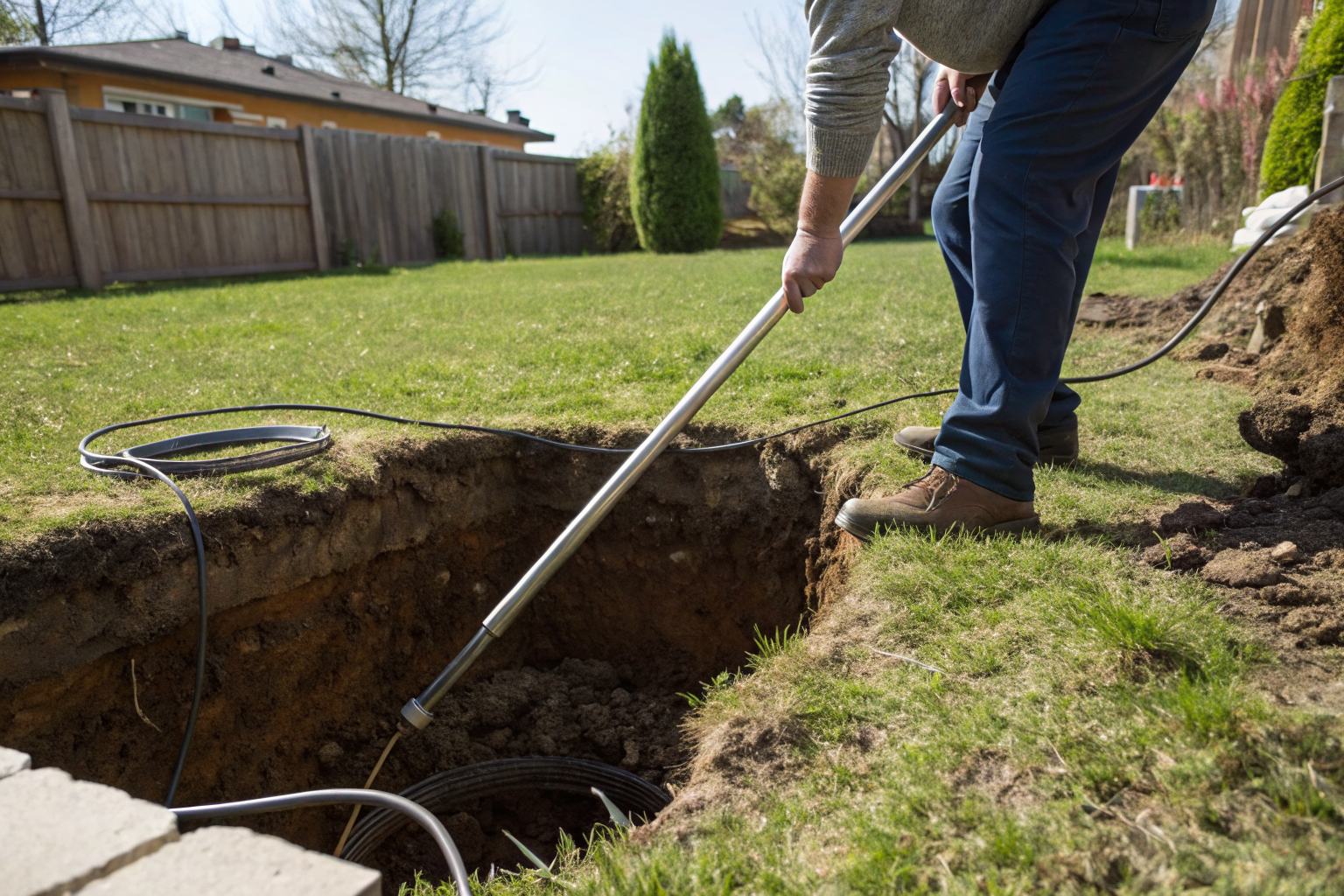
Probe rod technique locates septic tank boundaries by identifying the transition between soil and concrete or fiberglass tank walls. The Sludge Layer inside doesn’t affect this method since you’re finding the tank exterior.
Get a 3-4 foot steel rod, 1/4 inch diameter minimum. Rebar works perfectly. Thin rods bend and give false readings when they hit rocks instead of tank edges.
Start probing 10 feet from your house foundation in the suspected direction. Push the rod straight down with steady pressure – don’t hammer or you’ll damage the tank.
Work in a 2-foot grid pattern toward the drain field area. Mark spots where the rod hits something solid at 6-18 inches deep – that’s the standard burial depth for residential tanks.
Test the edges once you find solid contact. Septic tanks are rectangular, typically 8-12 feet long. Probe around the perimeter to confirm you’ve found a tank, not a buried rock.
Mark all four corners with spray paint or flags. This gives you the complete tank footprint for future maintenance access.
Stop probing once you confirm tank boundaries. Excessive probing can crack older concrete tanks or damage inlet/outlet pipes.
Standard residential septic tanks are buried 6-18 inches below ground surface. If you’re hitting solid objects deeper than 24 inches, you’ve probably found bedrock or an old foundation, not your septic tank.
One warning: avoid probing during wet conditions. Saturated soil makes it impossible to distinguish between tank edges and compacted earth layers.
When Should You Call Electronic Locating Services?
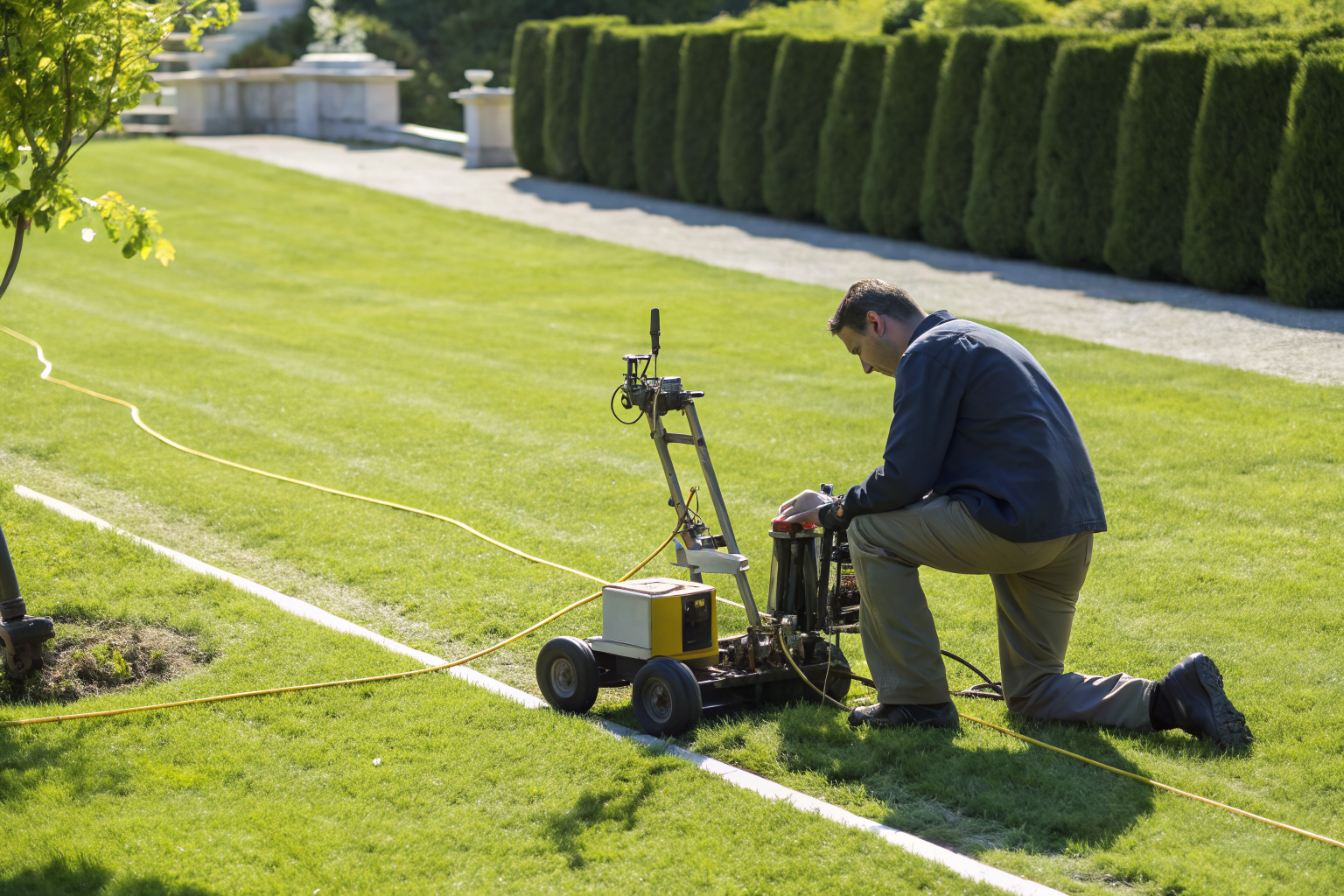
Electronic locating services use ground-penetrating radar to find septic tank locations when DIY methods fail. These professionals achieve higher accuracy rates but cost more than self-location attempts.
| Method | Cost | Time Investment | Success Rate | Best For |
|---|---|---|---|---|
| County Records | Free | 2-4 hours | 73% (post-1970) | Newer homes with permits |
| Visual + Probing | $20-50 | 3-6 hours | 65% combined | Accessible yards, obvious signs |
| Professional Locating | $150-300 | 1-2 hours | 95% first attempt | Failed DIY, complex properties |
| Emergency Excavation | $200-400 per hole | 4-8 hours | 100% eventually | Last resort, urgent repairs |
Call professionals when your property has underground utilities, concrete driveways over the suspected area, or when Septic System Inspection deadlines force quick results. Electronic equipment detects tank walls through interference patterns invisible to probe rods.
Professional locating services have 95% first-attempt success rate because they use multiple detection methods simultaneously. Ground-penetrating radar, electromagnetic detection, and soil density analysis work together to eliminate false positives.
Actually, this cost analysis assumes standard residential properties. Larger lots or commercial septic systems cost more to locate because of the expanded search area.
What Do You Do When Standard Methods Fail?

Alternative methods work for difficult cases when county records don’t exist and visual indicators give conflicting signals. The Effluent flow pattern and Anaerobic Bacteria activity can guide your search when conventional approaches fail.
| Situation | Primary Method | Backup Option | Expected Cost |
|---|---|---|---|
| No county records | Professional locating | Selective excavation | $150-400 |
| Utilities interfere | Hand excavation near house | Follow sewer line | $200-300 |
| Shared/abandoned system | Property survey research | Multiple tank search | $300-600 |
| Concrete/asphalt coverage | Core drilling samples | Full professional scan | $400-800 |
Excavation costs average $200-400 per attempted location. Before you start digging random holes, try these targeted approaches:
Follow your main sewer line from the house foundation. The Septic Tank connects directly to this line, usually within 20 feet of where the sewer exits your basement or crawl space. Use a plumber’s snake with a locating transmitter if the clean-out access allows it.
Check property surveys for easement locations. Septic systems can’t cross property lines, utility easements, or well water protection zones. This eliminates large sections of your search area.
One thing I should mention about abandoned systems: homes converted to municipal sewer sometimes left old septic tanks buried and unused. Property records from your title company will show sewer connection dates if this applies to your situation.
Legal considerations matter when your septic system crosses property lines or sits near boundaries. Verify ownership before excavating – some systems serve multiple homes through shared agreements recorded in property deeds.